Aircraft Model (Name & Manufacturer)
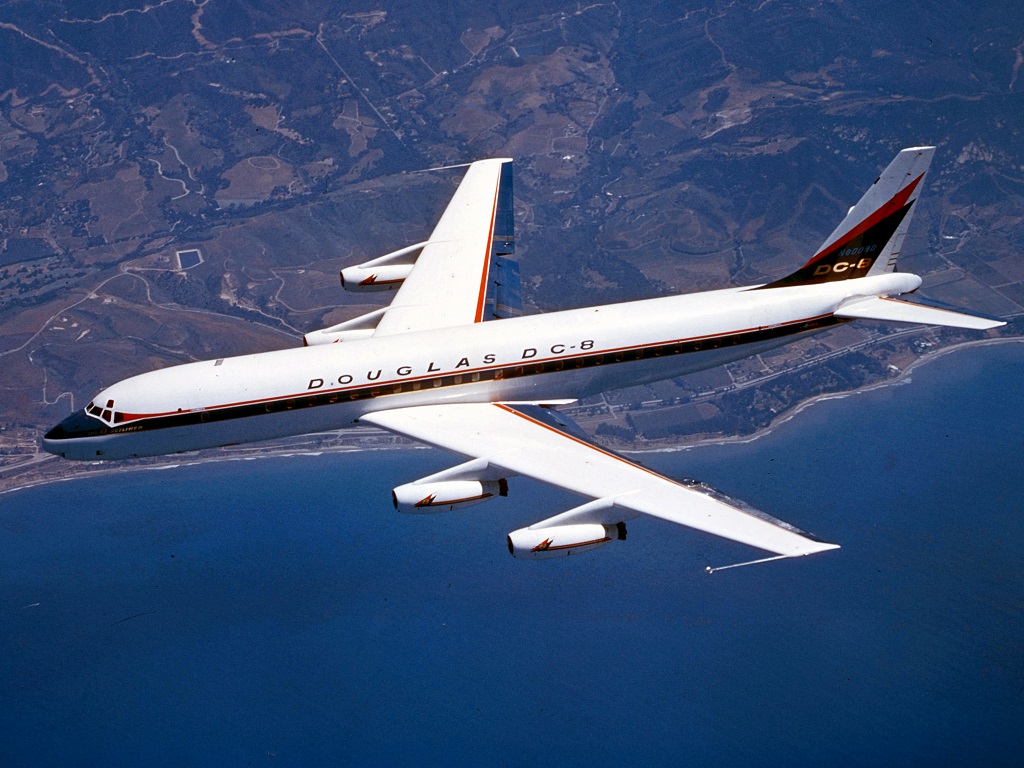
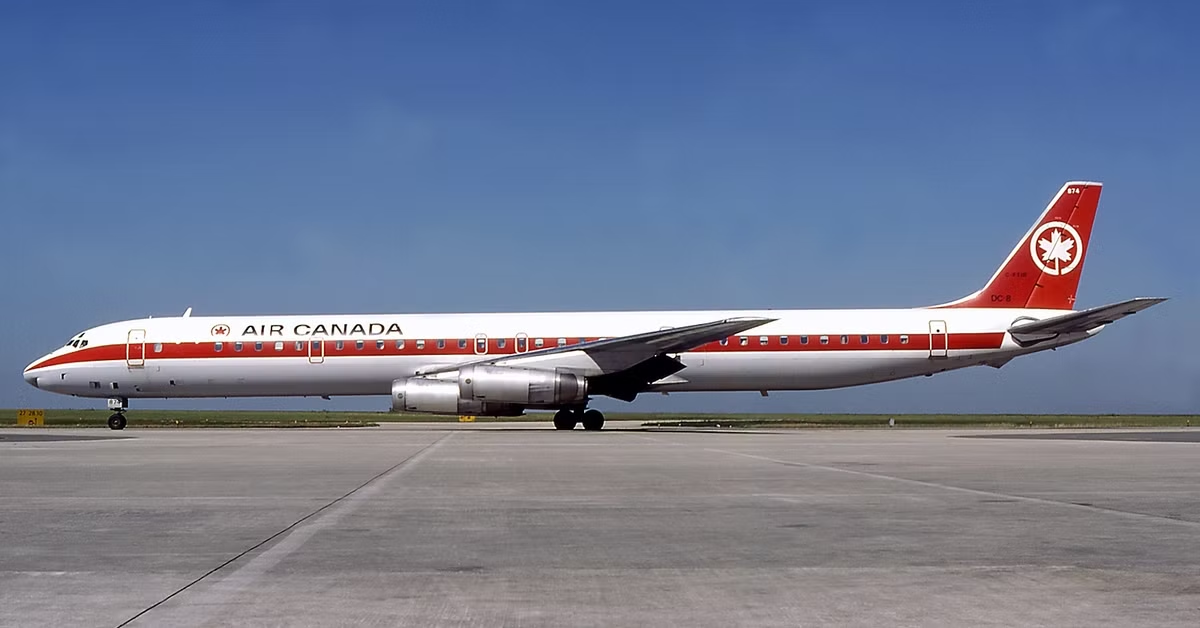
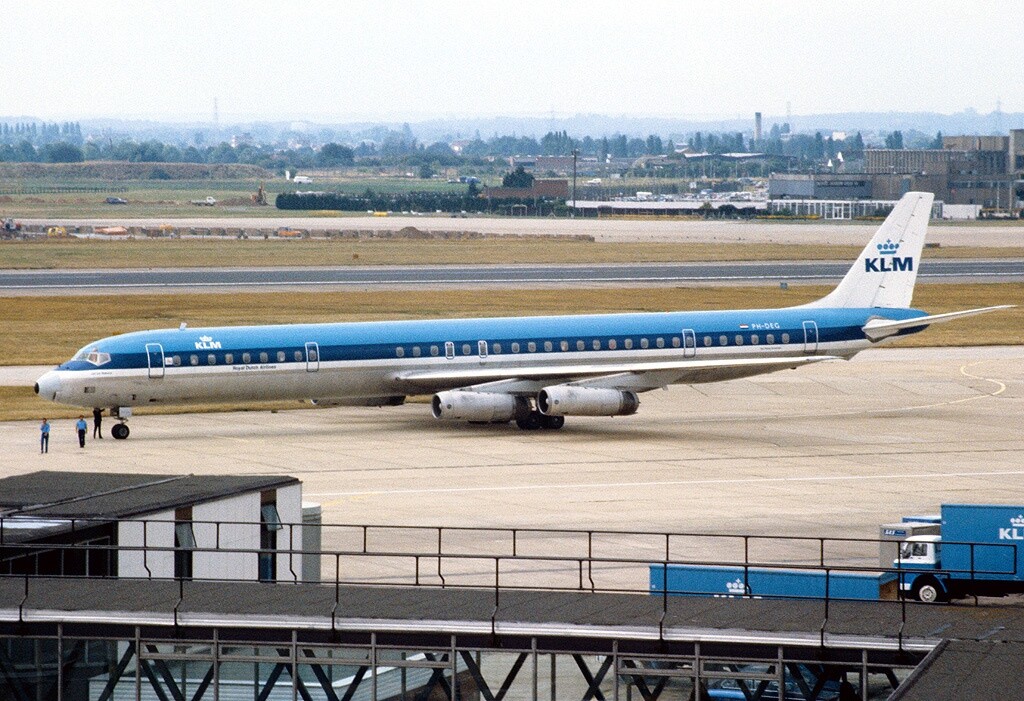
Douglas DC-8 by Douglas
Aircraft Category
Choose one: A / B / C / D / E / F
-10/-20/-30/-40/-43/-50/-55/-61/-71 = 142.4 ft (43.4 m), -63/-73/-62/-72 = 148.4 ft (45.2 m)
Purpose or Role in Game
It is an early long-range narrow-body jetliner. Both passenger and freight variants existed.
Why should this aircraft be added?
Only a couple are still operated but it was the main competitor to the 707 with the DC9 being the 727s competitor. Would provide a host of special liveries as well as a few, mainly cargo, regular liveries for players to use.
Airlines that use it
As of October 2025, one DC-8 is in commercial service with Congolese cargo airline Trans Air Cargo Service. This is DC-8-73 9S-AJO.OB-2231P remains flying with Skybus Jet Cargo of Peru, having been recently returned to service in February 2025.
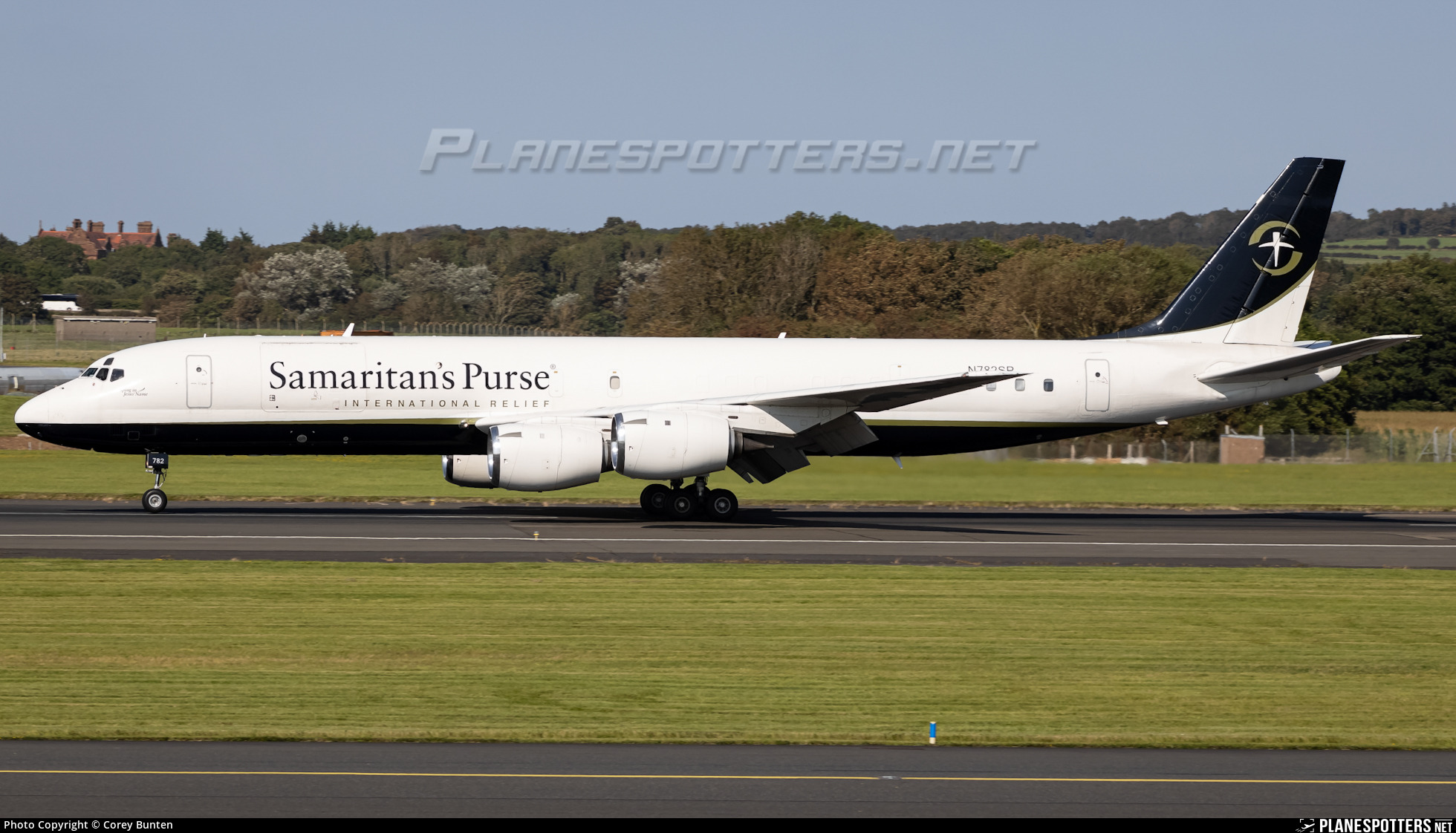
In the United States, the DC-8 has been retired from commercial service entirely. The last DC-8 flying was N782SP, operated by the humanitarian relief organization Samaritan’s Purse. It was a DC-8-72 Combi acquired from Air Transport International in 2015. According to a February 2025 interview with Samaritan’s Purse pilot John Morgan, organization planned to keep N782SP in service for “as long as the ministry has a need for it”. However, Samaritan’s Purse announced the following month that it planned to replace the aircraft with a Boeing 767F, which it did on November 14, 2025.
DHL - Operated until 2010 in the USA
Samaritan’s Purse- Just retired it as above
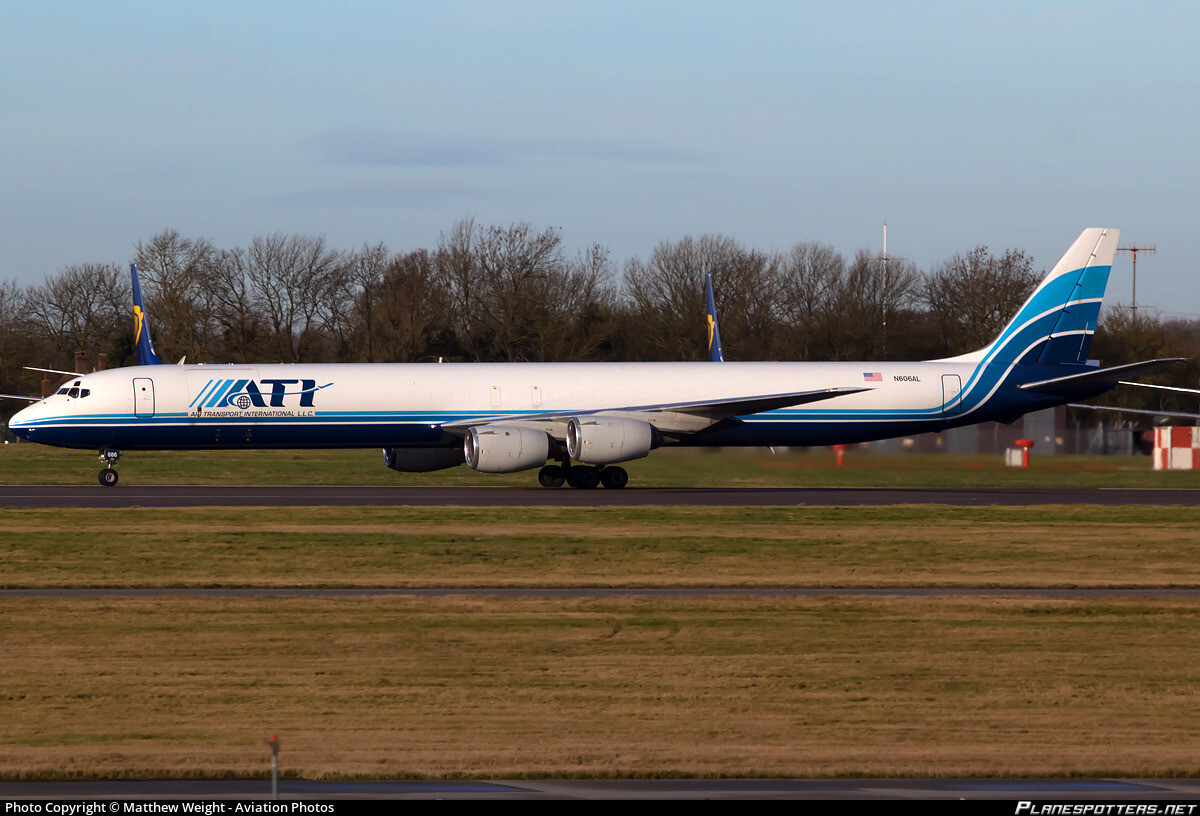
ATI - Retired in the 2010s
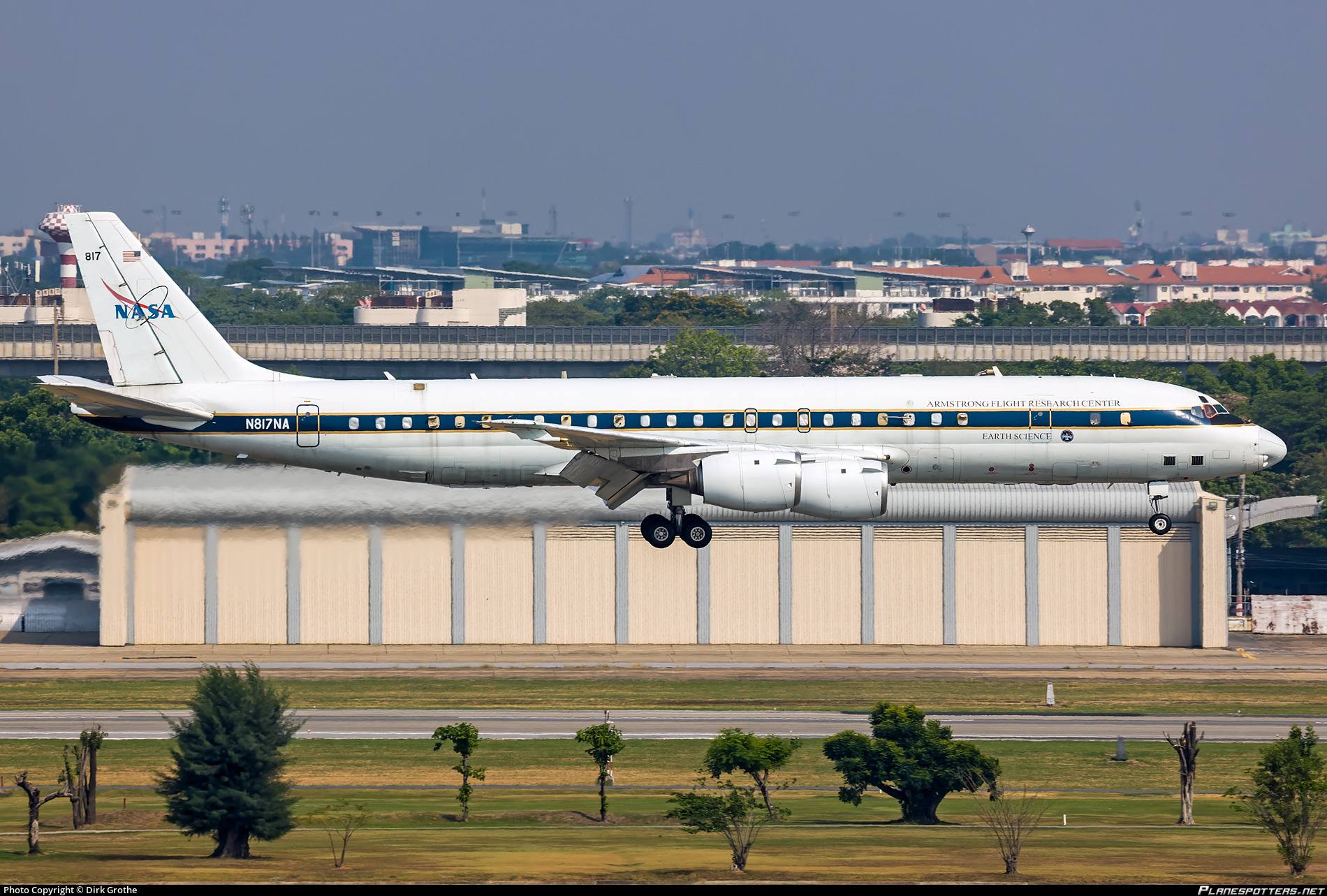
NASA operated till 2024
Special characteristics or variants
Nothing particularly special. Produced until 1972 when production shifted to the new DC-10. Lots of different variants with different engines, loud fella, personally think the -63/-73 look the best, the short ones look a bit odd.
Variants;DC-8-10
The original variant, domestic variant only, 30 built in total; 1 prototype, 23 for United and 6 for Delta. 16 of United’s updated to -20, 5 updated to -50 and all Delta’s updated to -50.
DC-8-30
The first variant that was intercontinental with newer more powerful and efficient engines, 1/3 more fuel and strengthened fuselage and landing gear. -31 was the first variant followed by the -32 with a higher takeoff weight and then the -33 with more powerful engine, higher takeoff weight and better flaps for more efficient cruising. 57 DC-8-30s were produced (five of which were later upgraded to DC-8-50s.
-32 variant above,DC-8-40
The DC-8-40 was essentially the -30 but with Rolls-Royce Conway 509 engines for better efficiency, less noise and less smoke. Only 32 of these were built as US airlines were unwilling to purchase a foreign engine for their aircraft as well as the Conway being less advanced to the PW engines. There were 3 versions, the -41 and -42, where the -42 had a slightly higher takeoff weight, and the -43 which had a higher takeoff weight than the -42 as well as the 1.5° flap setting of the -33. It also introduced a 4% leading-edge wing extension to reduce drag and increase fuel capacity slightly – the new wing improved range by 8%, lifting capacity, and cruising speed by better than 10 knots (19 km/h; 12 mph).
DC-8-50
The definitive short-fuselage DC-8 came with the same engine that powered the vast majority of 707s, the JT3D. The DC-8-51/-52/-53 all varied based on their weights going up every variant. The -55 variant took the strengthened fuselage from the new freighter variants as well as higher takeoff weight to its previous sub-variants. 142 were built.
Speaking of freighter, the -50 was the first to have a freighter version as well as combi versions for KLM ofc. It was called the DC-8 Jet Trader. An original plan to fit a fixed bulkhead separating the forward 2⁄3 of the cabin for freight, leaving the rear cabin for 54 passenger seats was soon replaced by a more practical one to use a movable bulkhead and allow anywhere between 25 and 114 seats with the remainder set aside for cargo. A large cargo door was fitted into the forward fuselage, the cabin floor was reinforced and the rear pressure bulkhead was moved by nearly 7 feet to make more space - taken from wiki. 62 were built.
DC-8-60 Super 60 Series
DC-8 Series 61
The Super DC-8 Series 61 was designed for high capacity and medium range. It had the same wings, engines and pylons as the -55, and sacrificed range to gain capacity. The fuselage was stretched by 11m for the extended capacity. A cargo door equipped DC-8-61CF was also available. 78 -61s and 10 -61CFs were built.
DC-8 Series 62
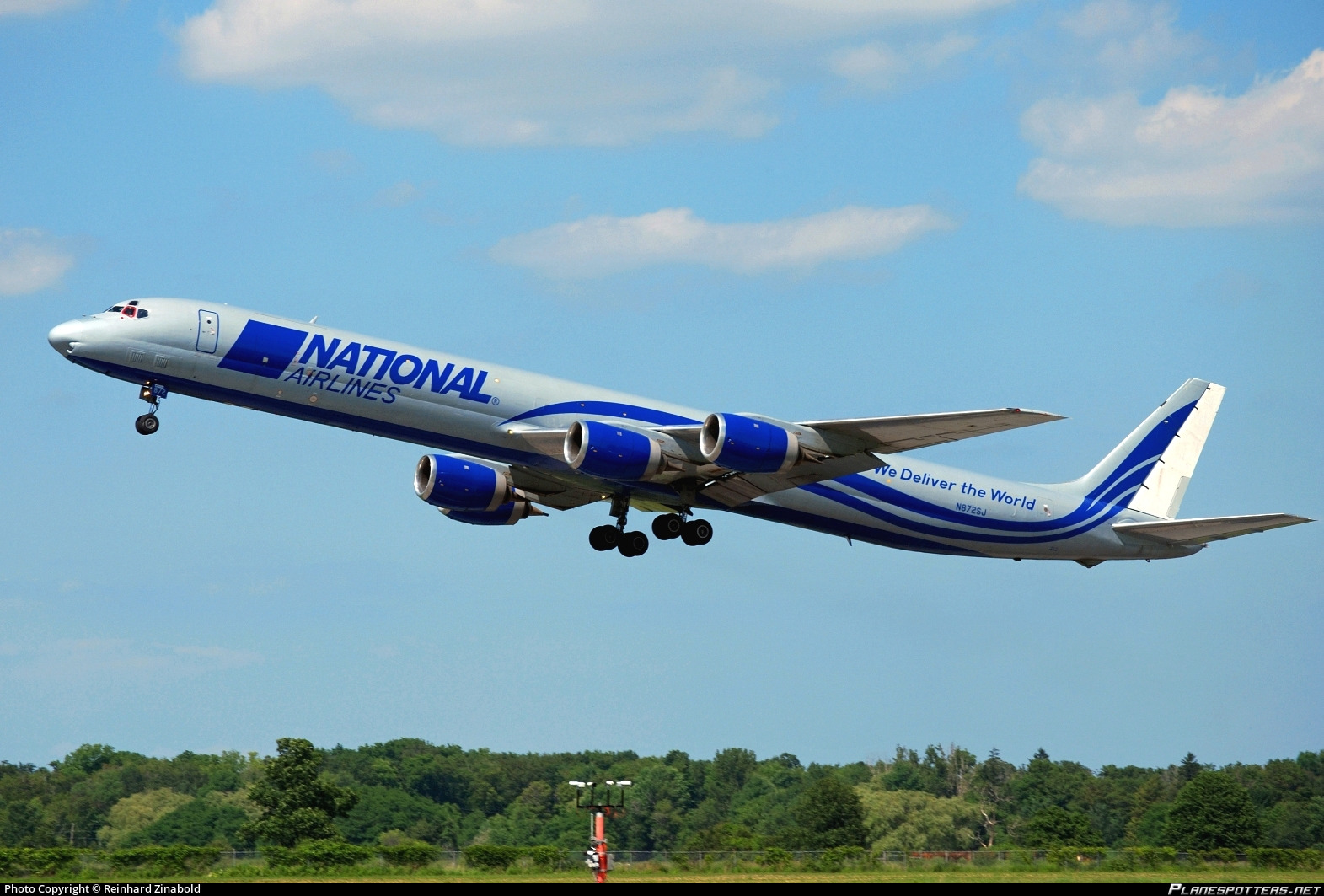
This only had a 1m stretch with 3 foot wing extensions for increased efficiency. The -62 had a similar range to the -53 of 6000 miles but could carry an extra 40 passengers. 51 DC-8-62s, 10 -62CFs, and 6 -62AFs. The CF was convertible whereas the AF was fully cargo.
DC-8 Series 63
The Series 63 had the same fuselage length of the -61 but had the aerodynamic refinements and increased fuel capacity of the -62 and better engines increasing its takeoff weight. 41 DC-8-63s, 53 -63CF, 7 -63AF, and 6 -63PFs. The 6PFs were purchased by Eastern Air Lines which had the same strengthened main deck of the freighter but didn’t have the main cargo door.
DC-8-70 Super 70 Series
These were were conversions of the above Super 60s but with better CFM engines producing a lot more power and increasing the maximum takeoff weight. As well as the re-engine, 70-series aircraft got new avionics, a new air conditioning system and new wing skins. Aircraft would also typically undergo heavy maintenance and an interior refresh.







Optional: Links or references
Douglas DC-8 - WikipediaDC-8-62F,
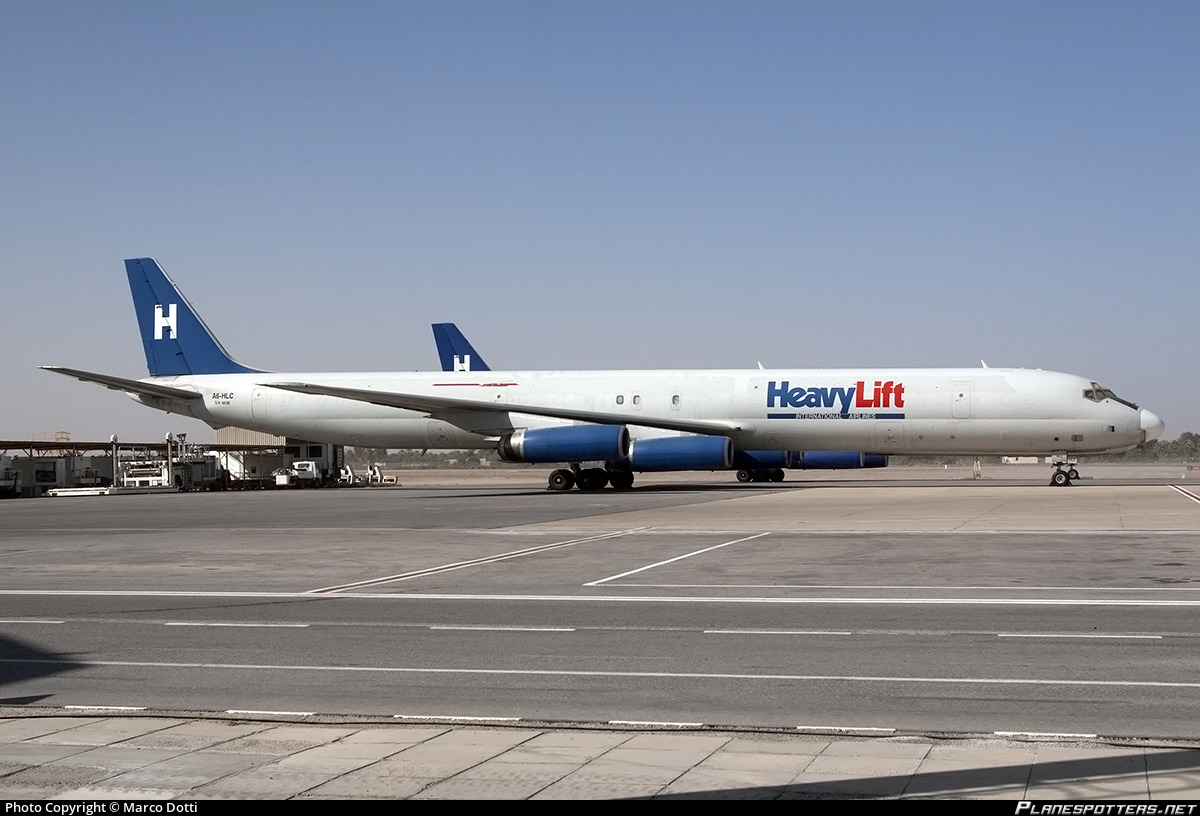
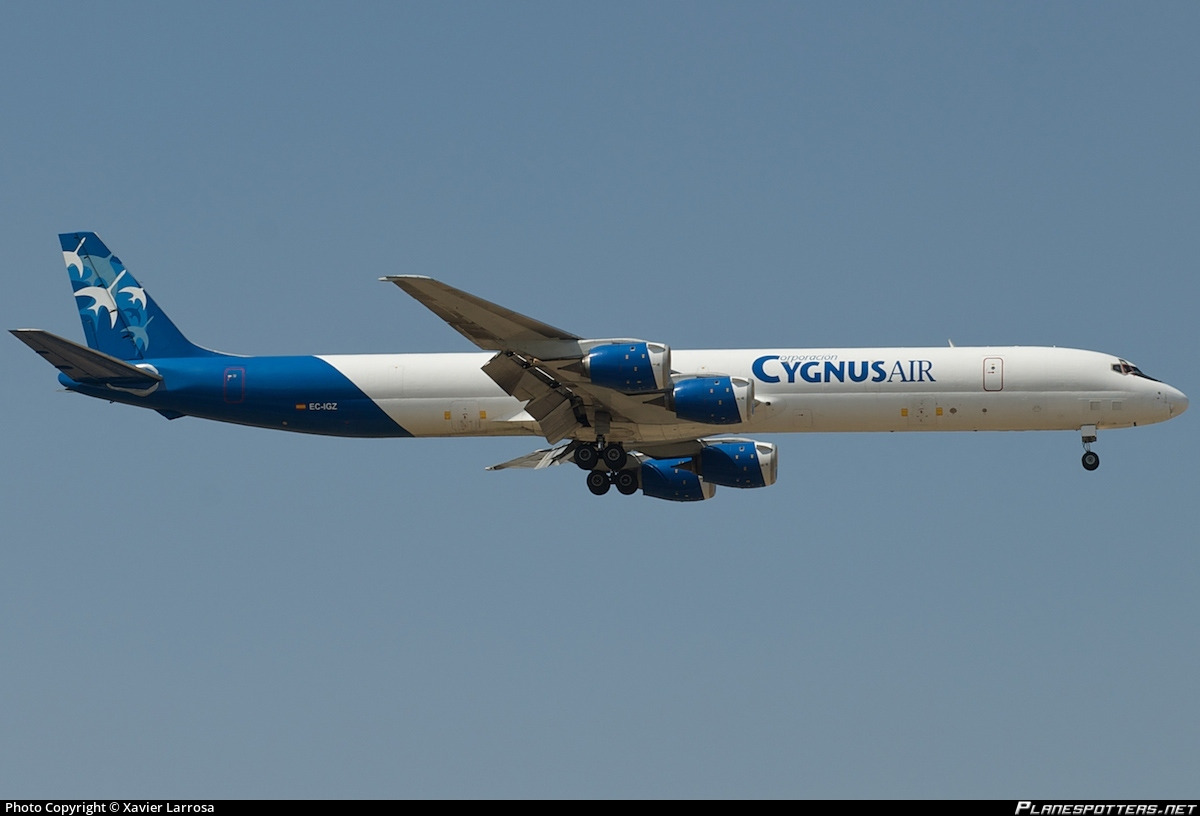
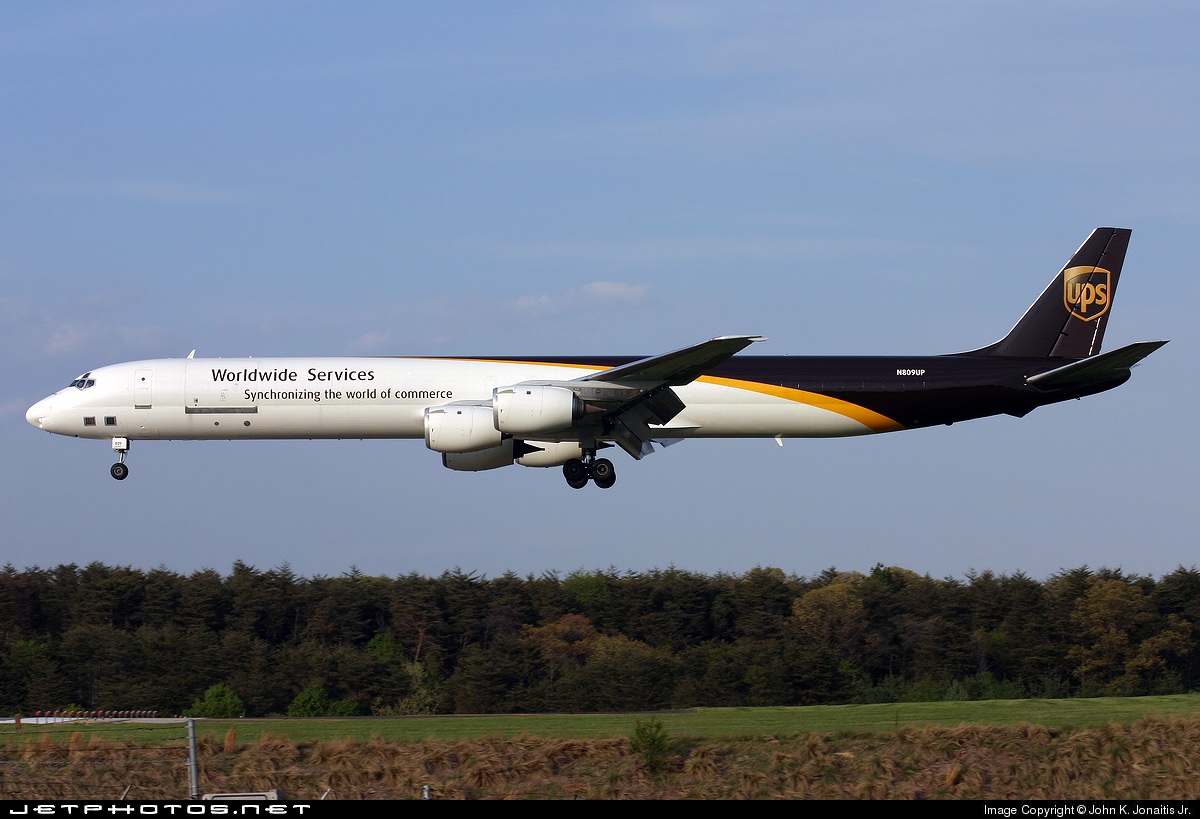
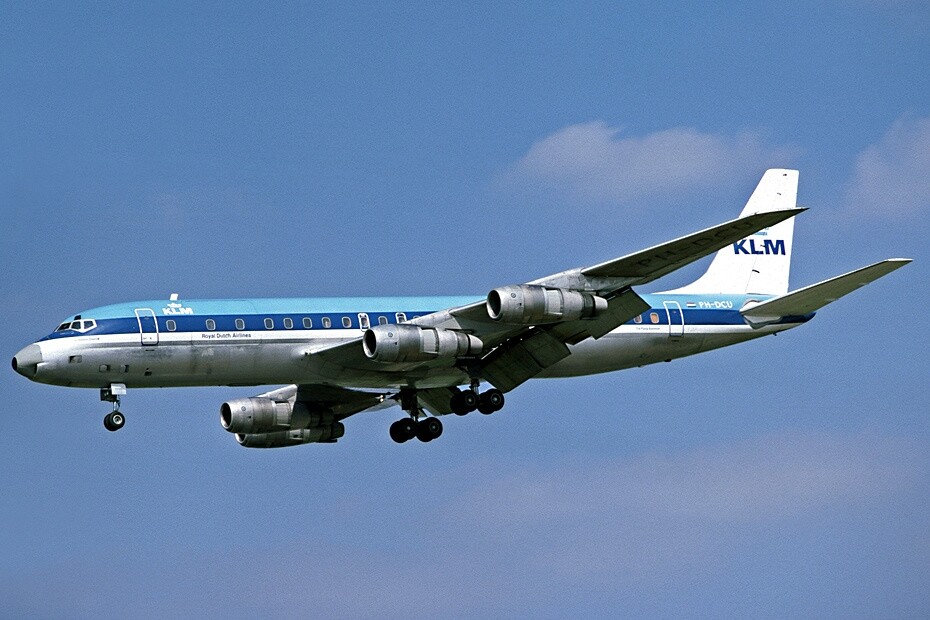
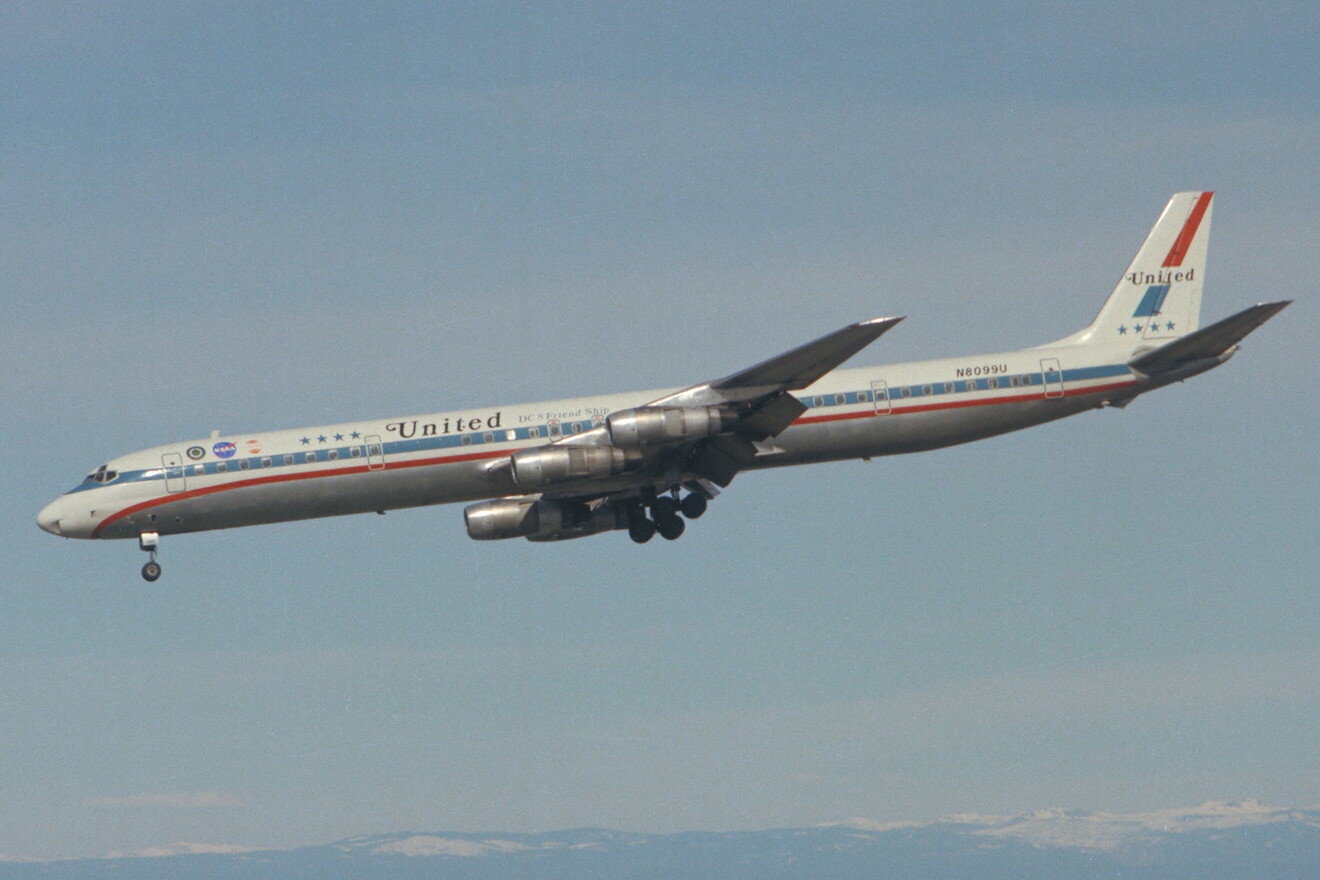
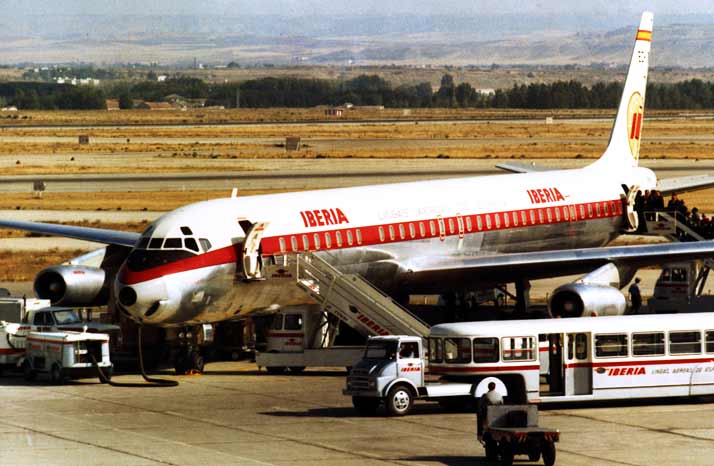
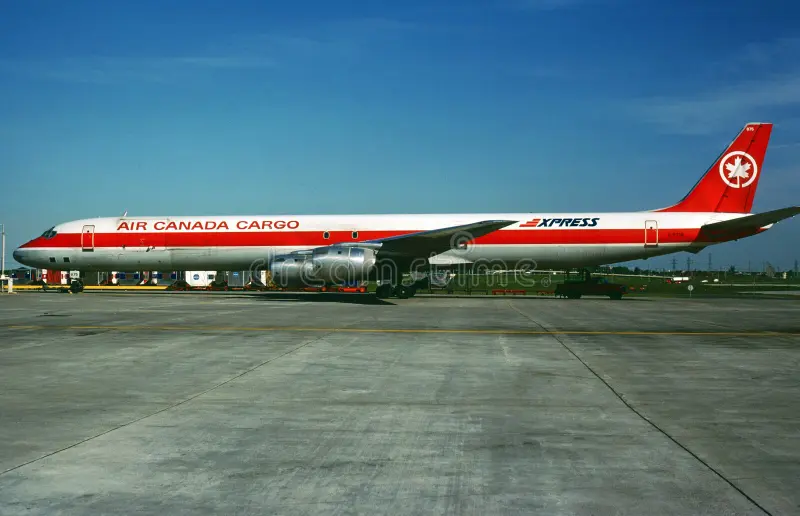
A fair few modern liveries mixed in which could be regular contracts,
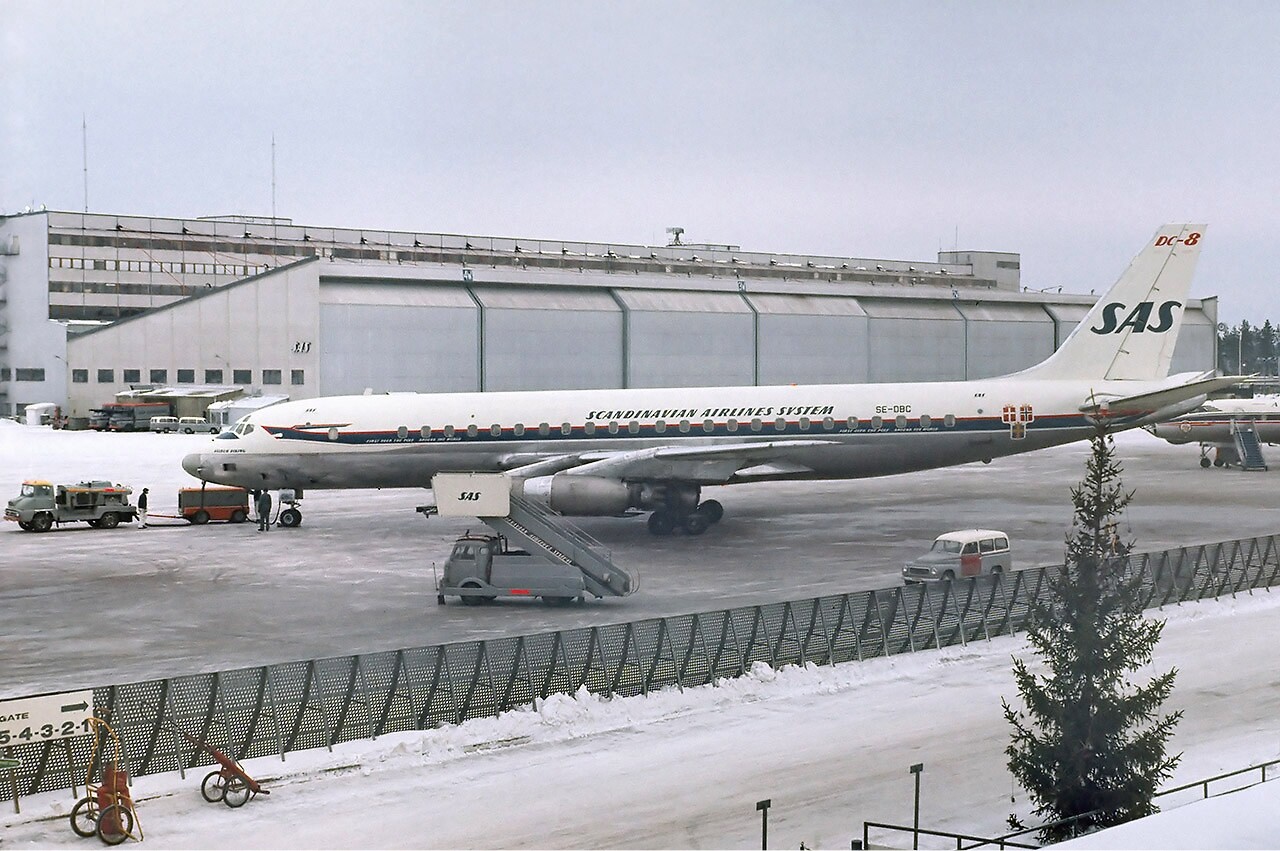
Old liveries,