Why don’t we all go out and buy a Euromillions ticket each and we’ll split the funds between ourselves and half to Charlie 
5 Likes
At least we have Pan Am’s rival Trans World Airways (TWA) in the game
2 Likes
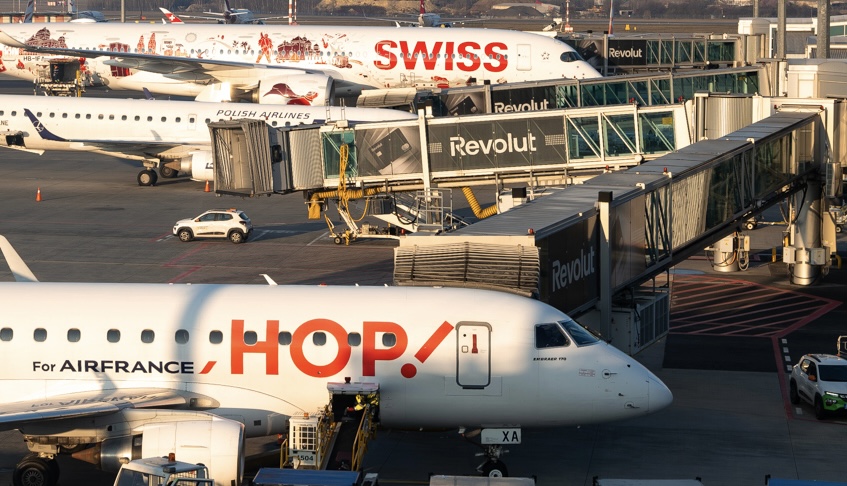
Also speaking of the PRG remodel, I know it will be a great airport remodel but I really hope for a more accurate jetway for PRG. Despite their age, the jetways and LEJ look really nice with their DHL branding, as well as the purple ones at BKK. I really hope for something similar to this with PRG, either with the newer Revolut branding (seen below),
Or my personal favourite, the orange ING branding (also seen below), as it would give the airport a bit of colour.
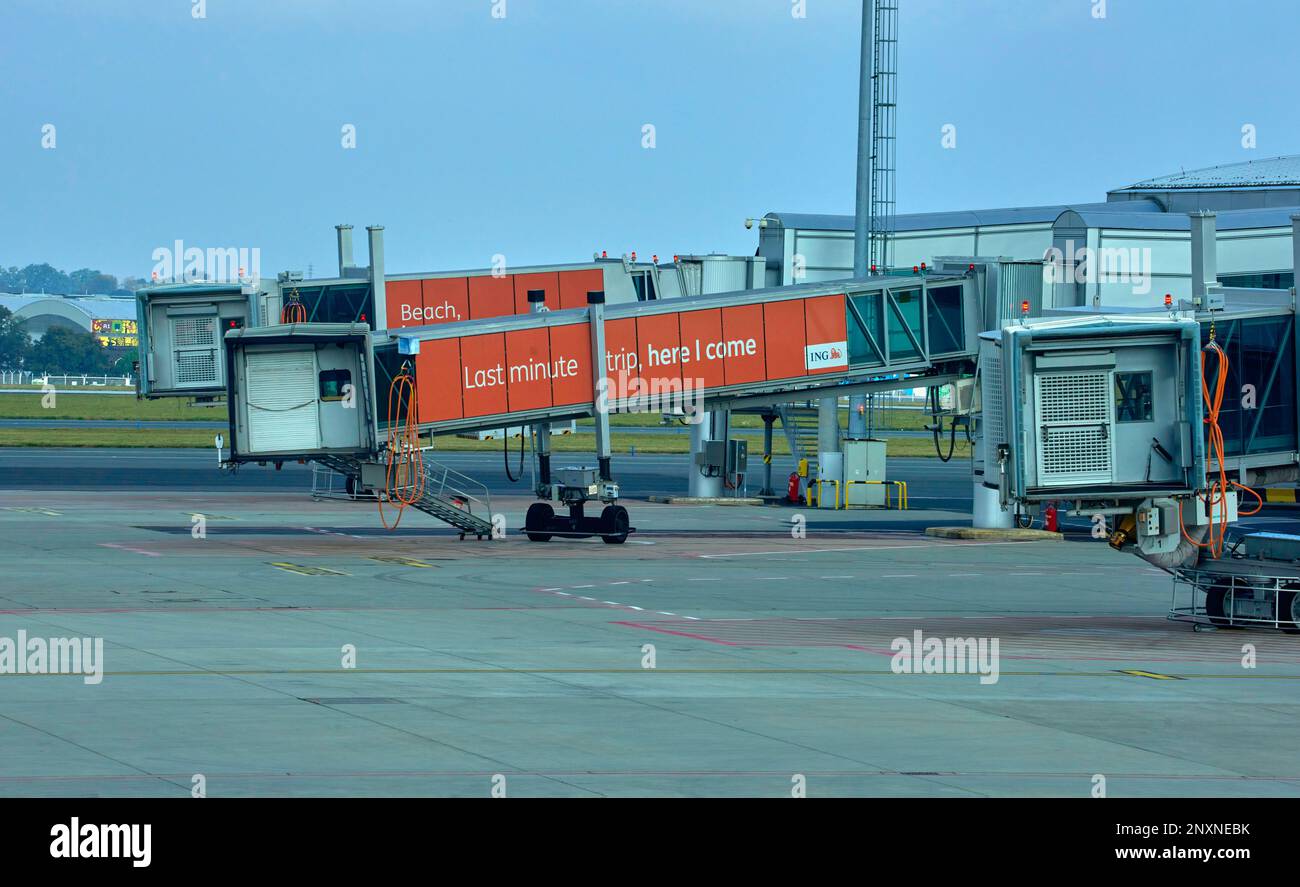
I know it might be a bit harder due to legal and copyright stuff but it has been done before at LEJ and BKK so I hope it will happen here!
7 Likes
i think PRG just have the standard glass jetbridges. with nothing on them but been a while since i went through there
3 Likes
At my last visit in March this year, they still had the ‚Revolut’ branding on them.
1 Like
Revolut seem to be the new HSBC of the airport jetbridges lol they are all over them here in MAN also
4 Likes
Is there no more information on the development of the L410? 
Kubasan the lead developer is preparing a Dev blog. 
7 Likes
The thing is with the jet bridges, I think BKK has shifted from the bank branding but I’m not sure, yet WOA still has the old advertisement so I don’t think it would be a problem if an older design was used
2 Likes
I’m genuinely hoping for some insight on the split handling as well, haven’t heard anything else about it and I’m really curious
6 Likes
The handling in split is as on every other airport. Look at https://www.split-airport.hr/
3 Likes
 Context Notice
If this post is shared outside the forum, please include a link to the original thread so readers can access the full context and discussion.
 Preview Only
The attached images show a Work in Progress (WIP) version of the aircraft and are not intended for sharing outside of our forum.
L410 Development Update – Liveries and Unity Integration 
And here we go — we have reached the stage where we depend heavily on our community.
For many aircraft, the livery selection begins with suggestions collected directly from our forum. Your references, historical photos, operator lists, and arrival suggestions help us decide which liveries should be prepared for the game.
As usual, our general guideline is:
-
Liveries used before 2010 are mainly reserved for special events and special arrivals.
-
Liveries used after 2010 are generally intended for standard contracts.
-
A few exceptions may be made where it makes sense for the aircraft, airport, or gameplay.
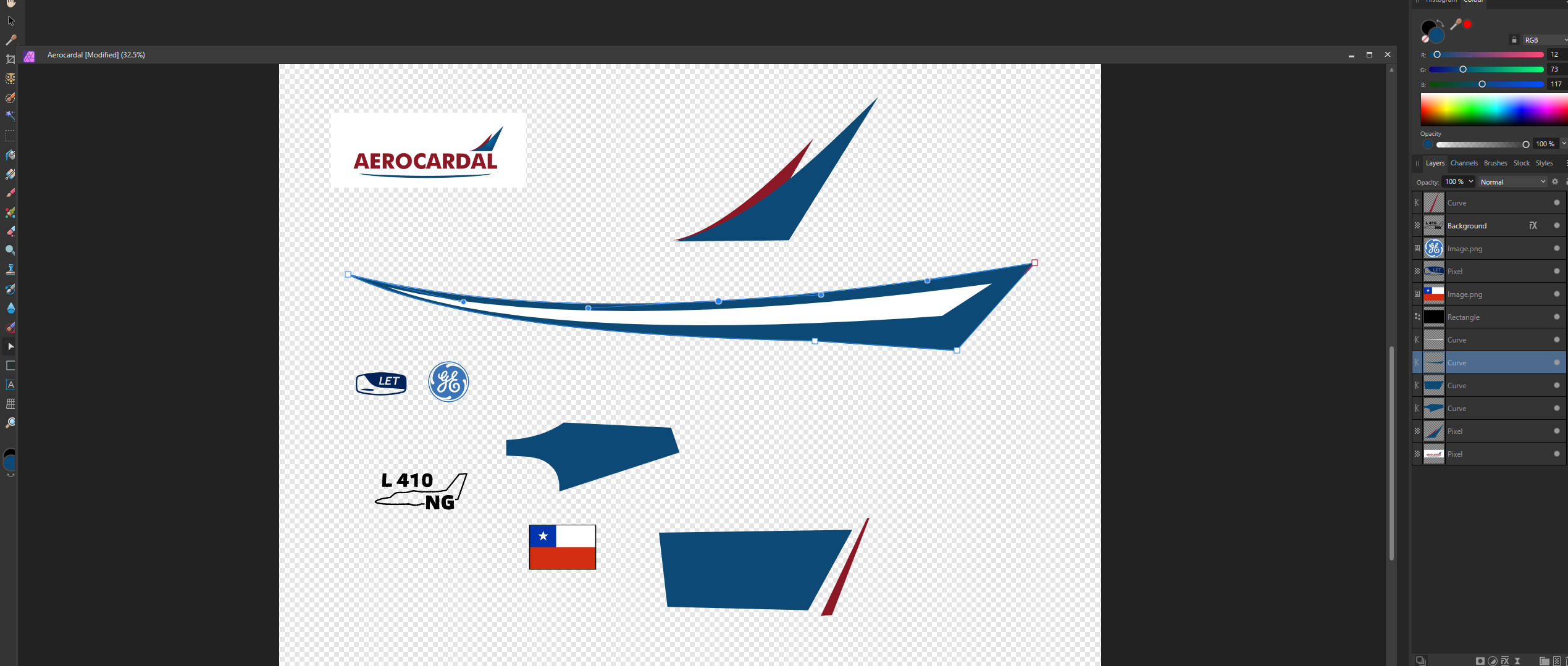
For the L410 family, this stage is especially challenging. Many of its operators are small, regional, historical, or relatively poorly documented. In many cases, we do not have access to usable source graphics, logos, or vector files.
That means Honza often has to recreate the complete livery from scratch, using photographs as the main reference. Every stripe, logo, registration marking, and small detail must be manually redrawn and adapted to the aircraft texture.
Here is a small preview of that process.
From Blender to Unity
At the same time, the finished 3D model is being transferred from Blender into Unity.
This is not a simple one-click export. Unity does not reproduce every object, material, hierarchy, pivot, or animation behavior from Blender exactly as it was created.
Because of that, the aircraft must be imported and adjusted piece by piece.
During this stage, Marek:
-
Imports and verifies the individual model components
-
Corrects object hierarchies and movement behavior
-
Adjusts pivots and animation settings where necessary
-
Implements and tests all aircraft animations
-
Defines the handling and service points
-
Assigns positions for vehicles, stairs, cargo loading, refuelling, and other ground operations
-
Checks that every service connects correctly to the aircraft
-
Tests the model under real in-game conditions
This is where the detailed Blender model becomes a functional aircraft inside World of Airports.
Marek handles this work with remarkable precision. Every animation, service point, and interaction must be placed correctly so that the aircraft not only looks right, but also behaves properly during arrival, turnaround, and departure.
Piece by piece, the L410 is moving from a static 3D model toward a fully operational aircraft in the game.
And this is where the final magic begins. 

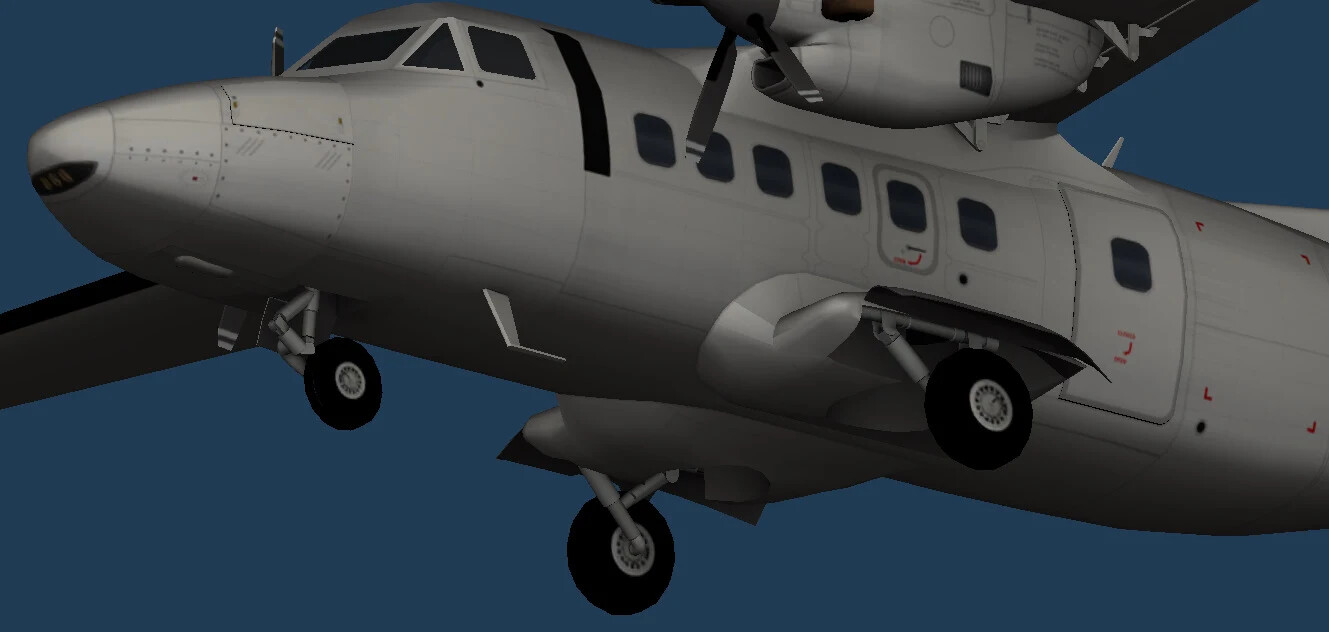
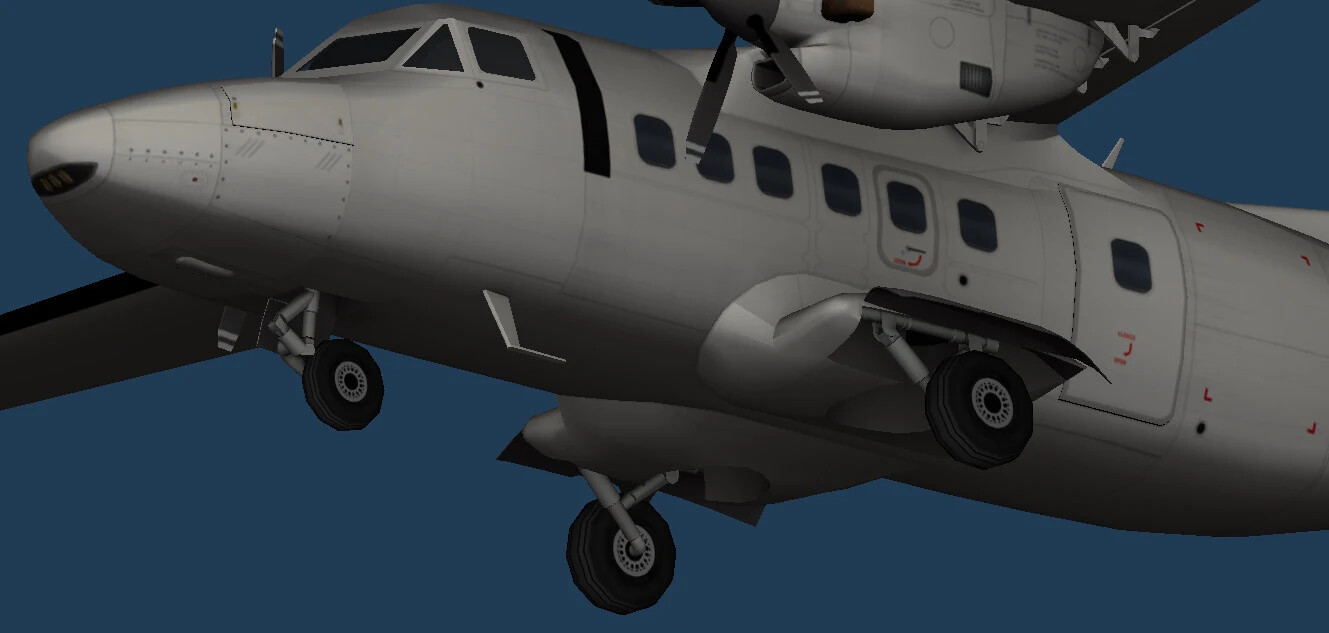
Here, Marek is preparing the LOD0 and LOD1 versions of the L410 in Unity.
Every aircraft in World of Airports has more than one level of detail. This allows the game to display many aircraft at the same time without rendering every small detail at full quality, even when those details would not be visible from a greater distance.
What is LOD0?
LOD0 is the full-detail version of the aircraft.
It is used when the camera is close enough for players to see the smaller details, such as:
-
Detailed landing gear
-
Antennas and sensors
-
Smaller fuselage elements
-
More complex geometry
-
Fine exterior details
This is the version you normally see during close-up views and handling operations.
What is LOD1?
LOD1 is a simplified counterpart of the same aircraft.
It is mainly used for the more distant camera views, where many aircraft can be visible across the airport at the same time.
At that distance, very small details would no longer be noticeable, so they are removed or simplified. This reduces the number of polygons the game has to render and helps save performance.
The goal is to keep the aircraft looking correct from a distance while avoiding unnecessary calculations for details the player cannot see.
Why is this important?
Busy airports can have many aircraft visible at once. Rendering every aircraft at full detail all the time would significantly increase the load on the device.
By switching between LOD0 and LOD1 depending on the camera distance, the game can maintain a good balance between:
-
Visual quality
-
Rendering performance
-
Device compatibility
-
The number of aircraft visible at once
The transition must also be prepared carefully so that the aircraft does not suddenly change shape or lose important visual features when the game switches between the two models.
It is another technical step that may not be very obvious during normal gameplay, but it plays an important role in keeping busy airports running smoothly.
56 Likes
Wow wow wow looks really cool 
3 Likes
That’s fascinating, thanks for the overview! Also, that livery is crisp, looks really good!
6 Likes
Wow, when you think it can’t get any better somehow the model quality just keeps on Improving
2 Likes
I am very, very grateful that finally someone thinks the same and explains it in great detail. I fully 1000% agree with you, especially the last point, without discussing CGK this forum is very quiet. Even the developer started to spill what will happen in the future due to the discussion about CGK.
Please remember spoiler about L410, contract activity ping, another visual enhancement, etc. “after discussion CGK airport”.
4 Likes
I was fascinated by the explanations and the level of detail. Congratulations on the excellent work. I admit I’m very excited for the next DevBlog and the upcoming hints about the next airport. Many thanks.
5 Likes
Really liking these detailed development milestone details, thanks for sharing it!!!
Also a really wonderful model and livery
2 Likes
Tomas, Ruda, and the rest of the team are absolutely hammering away on PRG.
The 3D team has now handed over the airport model to the DevOps team, marking another important milestone in development.
Ruda has already completed the 24 standard taxi route network and is now working on the taxi routes for the opposite runway direction. As you can imagine, Prague is a fairly complex airport, so there’s a lot happening behind the scenes.
To give you a small glimpse of what’s coming, I’ll be posting a few scenery cutouts and sneak peeks this Saturday. 
Stay tuned!
49 Likes
Amazing updates as always. these WIPs posts are EPIC
5 Likes