What is your suggestion?
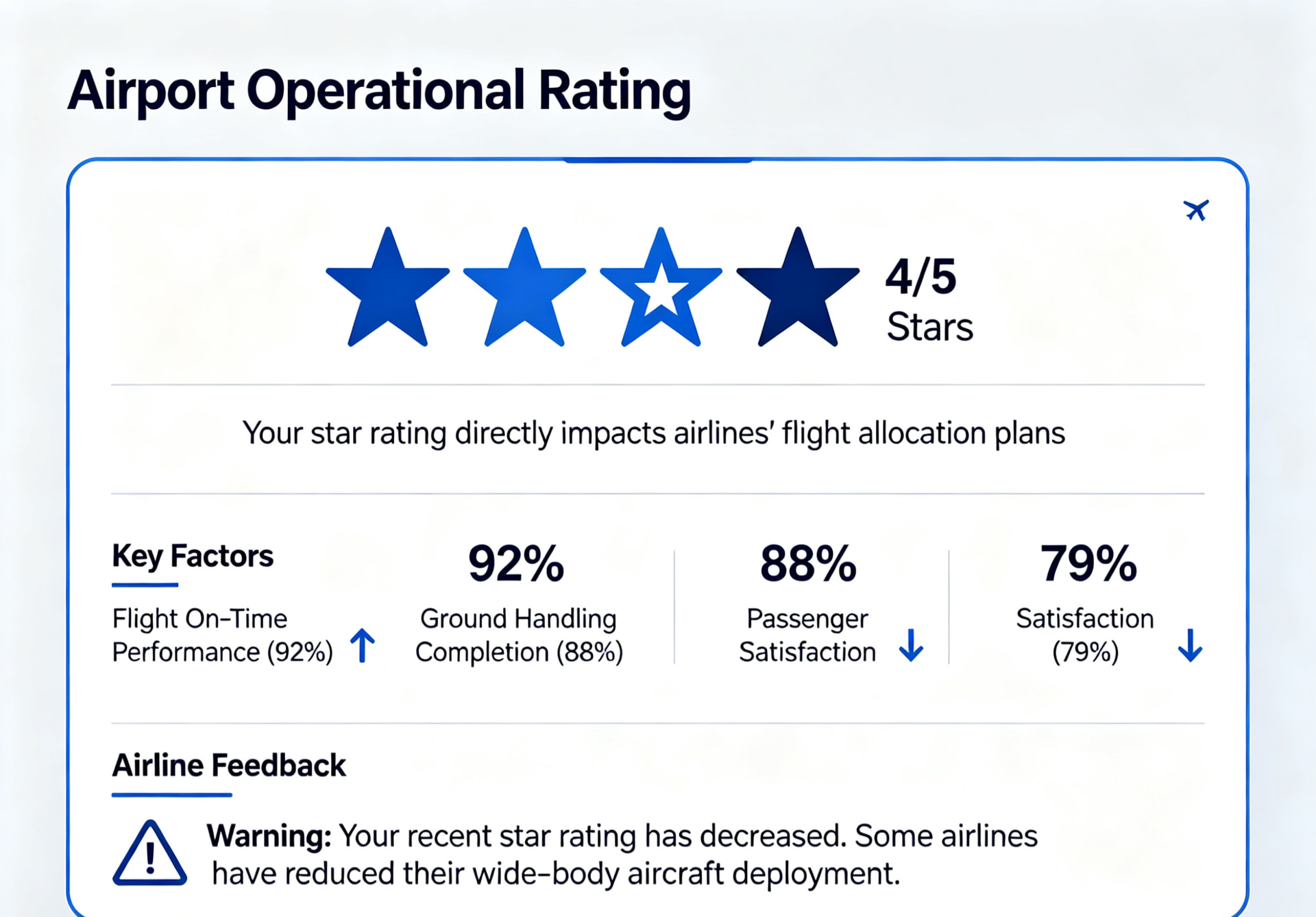
Replace the current individual aircraft contract purchase system with tiered airline partnership contracts, fully aligned with real-world civil aviation rules.In real aviation, airports never own or operate commercial aircraft. An airport’s daily flight schedule is 100% determined by each airline’s dispatch team, who submit approved flight plans to the airport. Airports only act as ground service providers, earning revenue from landing fees, bridge fees and handling charges.
This proposal requires ZERO changes to your existing core systems, and 100% reuses all your current in-game assets, economic rules, flight generation logic and progression systems.
How would it work in the game?
The implementation is fully built on your existing game framework, with no overhauls needed:1. Tiered Contract Design (Low Entry Barrier)
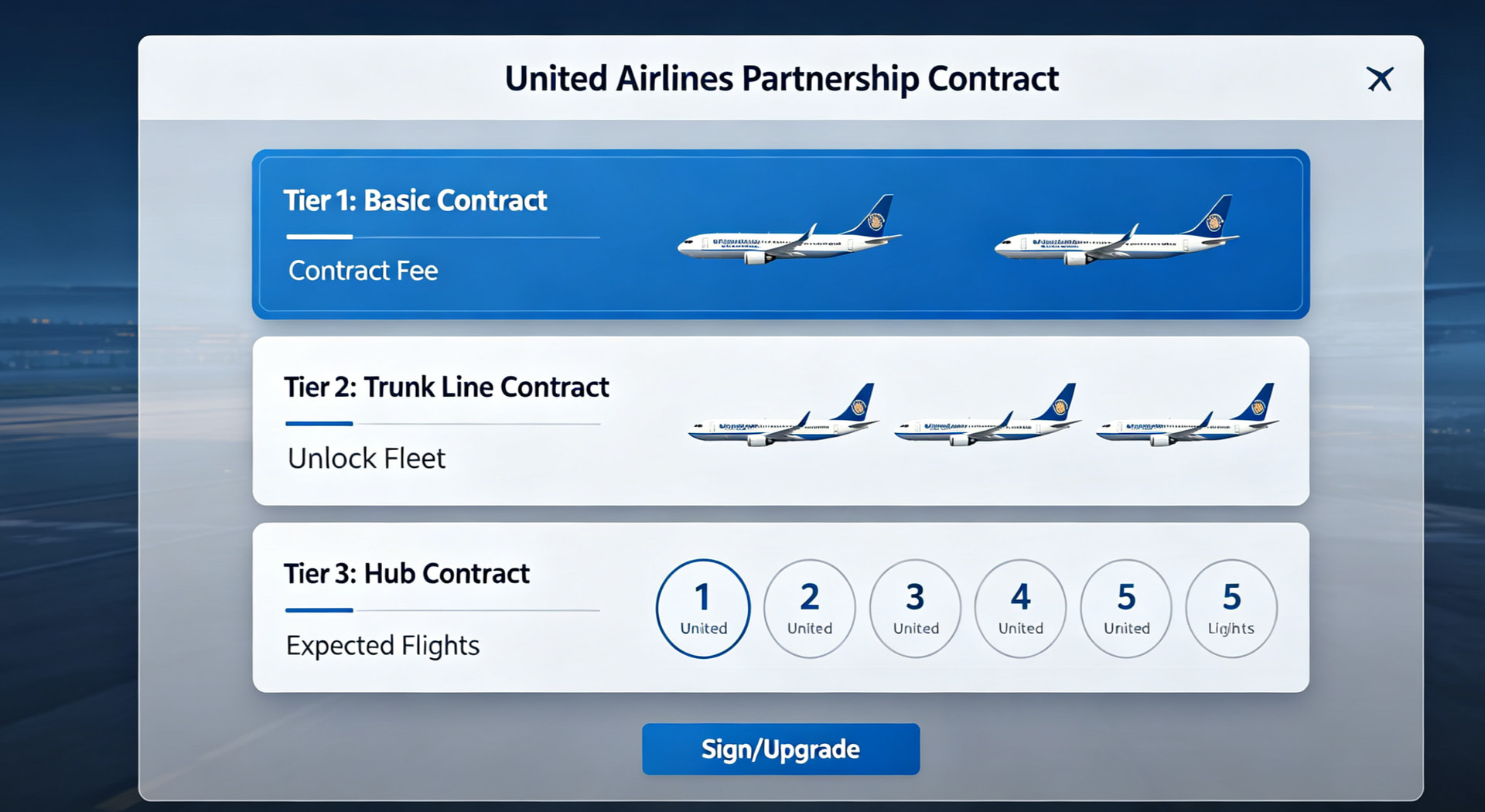
Bundle existing individual aircraft of each airline into 3 tiered partnership contracts. Players start with a Tier 1 Basic Contract, which costs the same as buying 1 single aircraft now, unlocking 1 aircraft for the player. They can upgrade the contract step-by-step to unlock the airline’s full stationed fleet, with total cost exactly equal to buying all individual aircraft separately.
2. 100% Compliance with Existing Airport Rules
The contract will only unlock and deploy aircraft that fully match your existing in-game limits: airport global aircraft category limits, stand type restrictions (narrow-body/wide-body), and available stand quantity. All existing airport, stand and aircraft rules are fully reused, no new code required.
3. Fully Preserve Existing 10-level Contract System
Every aircraft’s 10-level contract cap, upgrade cost, revenue value and flight logic remain completely unchanged. The airline contract only acts as an unlock portal for these existing aircraft assets, with no modifications to the underlying aircraft system.
4. Perfectly Aligns With Your New Ground System Under Development
By grouping flights into airline contracts, we naturally split arrival and departure workflows, enabling batch scheduling of your new ground vehicles by airline and flight batch. This eliminates the core pain points of vehicle routing conflicts and mixed arrival/departure tasks in the current system.
5. Seamless Support for Future Virtual Economy Features
All dynamic economic rules (fuel price fluctuations, inflation, taxes, passenger/cargo demand linked to city growth) can be adjusted in the airline contract module alone, with automatic full sync to all relevant flights. No need to modify the logic of each individual aircraft.
Why is this a good idea?
1.Unmatched Realism
Fully restores real-world airport operation logic, turning the game from an “aircraft purchasing clicker” into a true professional airport management simulation.
2. Zero Risk, Zero Balance Breakage
All existing economic values, progression rhythm, new player entry barrier and player save data are fully preserved. There is no need to rewrite core code, eliminating the risk of bugs and system instability.
3. Solves Top Player Requests
Naturally increases flight frequency on the same route, a long-standing player demand, without any major overhauls to the existing flight scheduling system.
4. Dramatically Reduces Future Development Costs
All future feature updates, rule adjustments and new systems only need to be updated in the airline contract module, instead of modifying every single aircraft’s logic one by one. This eliminates the “one change affects everything” pain point of the current scattered architecture.
5. Maximizes the Value of Your New Ground System
Turns your new ground vehicle models and animations from purely cosmetic upgrades into core gameplay elements, drastically improving the utilization of your art and development resources.
6. Deeper Strategic Gameplay
Players will make real airport operation decisions (e.g. choosing between low-cost carriers and full-service airlines, balancing fleet expansion and stand upgrades) instead of just grinding to buy scattered aircraft, greatly improving long-term player retention.
Optional: Image or reference