In simplicity, the Economy of the A35K. Let us begin:
INTRODUCTION/FIRST ARGUMENT: THE INCAPABILITY OF THE A35K AND B77W VS. A35K
The A35K is one of the most advanced, efficient, and capable long-haul aircraft ever built, yet at World of Airports it fails to perform anywhere near the level it realistically should, not because of its maintenance costs or purchase price, but because of how its seating capacity and profitability are currently modeled. The single biggest issue is that the A35K loses an unrealistic number of seats once players begin adding Business Class and First Class, causing its earning potential to collapse despite being an aircraft that competes directly with the Boeing 77W. In real life, the A350-1000 has an enormous cabin capable of comfortably carrying approximately 400–420 passengers in a standard three-class configuration, depending on the airline, yet in World of Airports it barely reaches around 358 seats when configured with Business Class and roughly 20 First Class suites. This means that simply attempting to create a realistic premium configuration causes the aircraft to lose approximately fifty to sixty seats compared to what they should realistically carry. Meanwhile, aircraft like the Boeing 77W, despite having a very similar overall passenger capacity in real life, retain significantly more seats under identical cabin layouts. Assuming both aircraft use 9-abreast economy seating, the A350-1000 and the B77Wshould have nearly identical capacities, yet the game’s configuration system gives the 777 a substantial advantage. Even under a 10-abreast economy layout, the 777 should only hold a modest increase over the A350; not the dramatic difference currently seen in-game. Because profitability in World of Airports depends heavily on passenger count, every missing seat directly reduces revenue, making the A35K far less competitive than it should be. The aircraft essentially pays the price of being a flagship long-haul airliner while delivering financial performance closer to much smaller widebodies, which simply does not make sense from either gameplay or realism perspective. The imbalance becomes even more apparent when comparing the A35K to aircraft like the A339 or the Boeing 789, because despite being significantly larger than those aircraft, the A35K often ends up carrying passenger numbers that are surprisingly close to the ones in the planes similarly. That effectively placed it into the wrong performance category despite its size and intended role. Instead of competing with the B77W, it begins feeling like an oversized A330, which completely defeats the purpose of unlocking and investing in one of Airbus’ flagship aircraft. Another issue is that the aircraft’s gross earnings do not properly reflect its size or operational role. For example, a Boeing 787-9 configured with approximately 13 Business Class seats, 10 First Class seats, and around 5300 NM of range reportedly produces gross earnings that are close to, or in some situations even higher than, an A35Kconfigured with around 20 First Class seats, especially after the new update in 3.6. 0.. Considering that the A35K is substantially larger, significantly heavier, has greater passenger capacity, and occupies a higher market segment than the 789, there is no logical reason why both aircraft should be generating nearly identical revenue. Players are effectively paying more for a larger aircraft while receiving little or no financial advantage in return. This discourages progression because unlocking the A35K does not provide the sense of improvement that a flagship aircraft should offer. Instead of feeling like the pinnacle of a player’s long-haul fleet, it often feels like an expensive cosmetic upgrade with only marginal financial benefits. Really, players who use the A35K in-game only use the aircraft if they like it from the real-world. From a gameplay perspective, every aircraft should have a clear purpose. Smaller aircraft should be cheaper and more flexible, while larger aircraft should justify their higher acquisition costs through improved earning potential. At present, the A35K struggles to fulfill that role because its seating limitations artificially suppress its profitability. According to Geo’s research, the B77W beats the A35K BY MILES in terms of profits and gross. This problem becomes even more obvious when comparing aircraft based on real-world capacity rather than in-game numbers. Yet in World of Airports, it effectively penalizes the aircraft whenever players attempt to recreate realistic premium layouts. That disconnect between reality and gameplay makes the aircraft feel inaccurately balanced rather than intentionally specialized. A buff does not necessarily require reducing maintenance costs because maintenance is not the root problem. Instead, I’d recommend focusing on increasing the aircraft’s available seating capacity when premium cabins are installed, revising how exit limits influence seating calculations, or adjusting ticket revenue so that the aircraft earns proportionally more per flight to compensate for the missing seats. Any of these changes would better represent the aircraft’s real-world position without making it overpowered. Even a moderate increase of 30–50 additional available seats in premium configurations would dramatically improve its competitiveness while keeping it balanced against the Boeing 777 family. Likewise, increasing its gross revenue to reflect its status as Airbus’ flagship long-haul aircraft would make purchasing and operating the A35K a rewarding progression milestone instead of a questionable economic decision. Numerous community discussions have highlighted that modern, highly efficient aircraft such as the A350 family underperform economically, with the A350-1000 being the most noticeable example because its seating configuration is disproportionately restricted by the current exit-limit-based system rather than its actual cabin dimensions. Overall, the issue is not that the A350-1000 is unusable, it can certainly be flown successfully—but rather that it consistently underperforms relative to its real-life capabilities, its purchase cost, its intended competitors, and player expectations. A flagship aircraft should feel like a meaningful upgrade, rewarding players for the significant investment required to unlock and operate it. Now, the A35K falls short of that goal because it sacrifices too many seats, generates too little additional revenue for its size, and cannot effectively compete with aircraft it was designed to rival. Buffing its seating capacity, adjusting the cabin configuration mechanics, or increasing its revenue scaling would not make it overpowered; it would simply allow the A35K to finally perform like the world-class long-haul flagship that is both in the progression of World of Airports.
My 2nd highest ever hit:
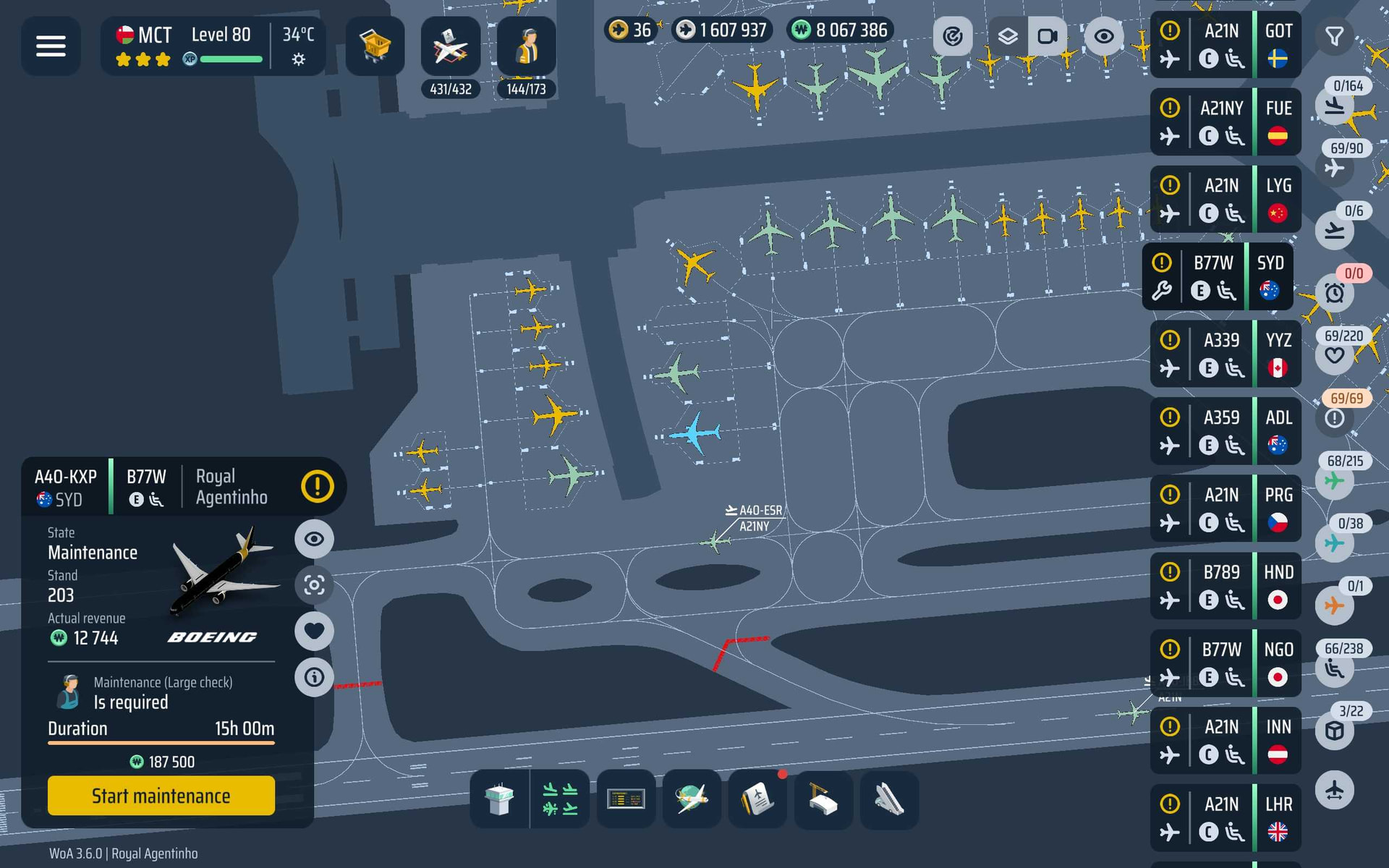
Darkness’s Second highest hit:
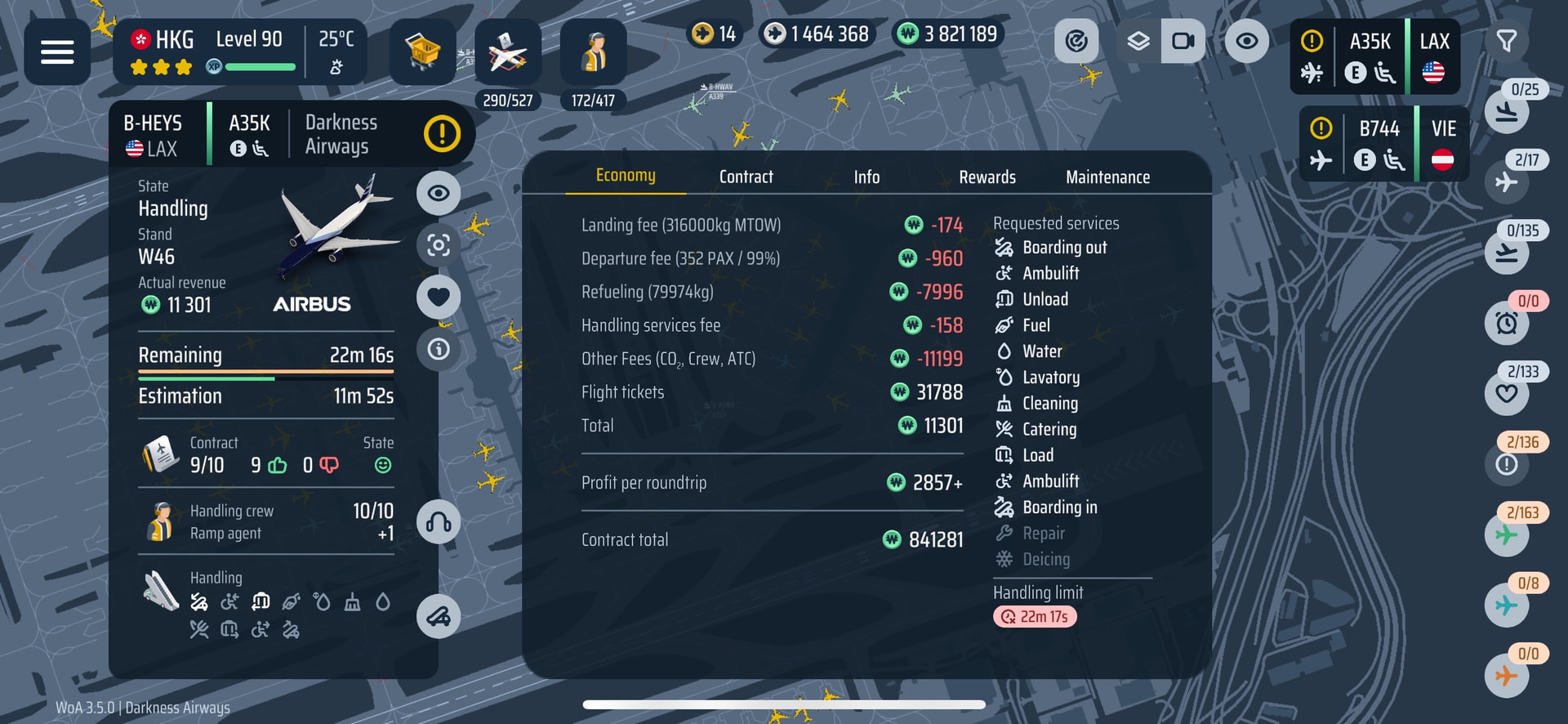
SECOND ARGUMENT: A359 VS. A35K
We are also underestimating something completely major, the A35K brother, the A359. Another issue that further highlights the imbalance is how the A359, which is supposed to be the smaller sibling of the A35K, can outperform it financially in World of Airports when configured with 18 First Class seats. From both a gameplay and realism perspective, this is extremely difficult to justify. The A35K exists specifically as a stretched, higher-capacity, higher-revenue evolution of the A359. Airlines purchase the A35K because it carries more passengers, generates more revenue on high-demand routes, and serves as Airbus’ direct competitor to the Boeing 777-300ER and 777-9. In World of Airports, however, the opposite can happen. After configuring both aircraft with premium cabins, the A350-1000 loses such a substantial number of economy seats that its additional size provides little to no economic advantage. In some cases, an A359with an 18 First Class configuration can match or even exceed the profits of the much larger A350-1000 despite having a significantly smaller fuselage, lower real-world passenger capacity, and lower acquisition cost, ESPECIALLY after the new update. This completely undermines the purpose of progressing to the larger aircraft. There should never be a situation where the smaller variant consistently delivers a better return on investment while the flagship model struggles to justify its higher operating costs and purchase price. If the A359 can produce equal or greater profits with a heavy premium configuration, there is very little incentive for players to unlock or operate the A35K outside of personal preference. Instead of feeling like a natural upgrade, the A35K becomes an economic downgrade, forcing players to spend more GP for an aircraft that often earns the same amount, or even less, than its smaller counterpart. This is the exact opposite of how the A350 family is positioned. The A35K should retain a clear advantage through higher passenger capacity, stronger gross revenue, and better overall profitability, especially on long-haul routes where its larger cabin is meant to shine. While the A35K should remain an efficient and competitive aircraft, it should not outperform the flagship variant simply because the larger aircraft is disproportionately penalized by the game’s seating model. Refer to the images below.
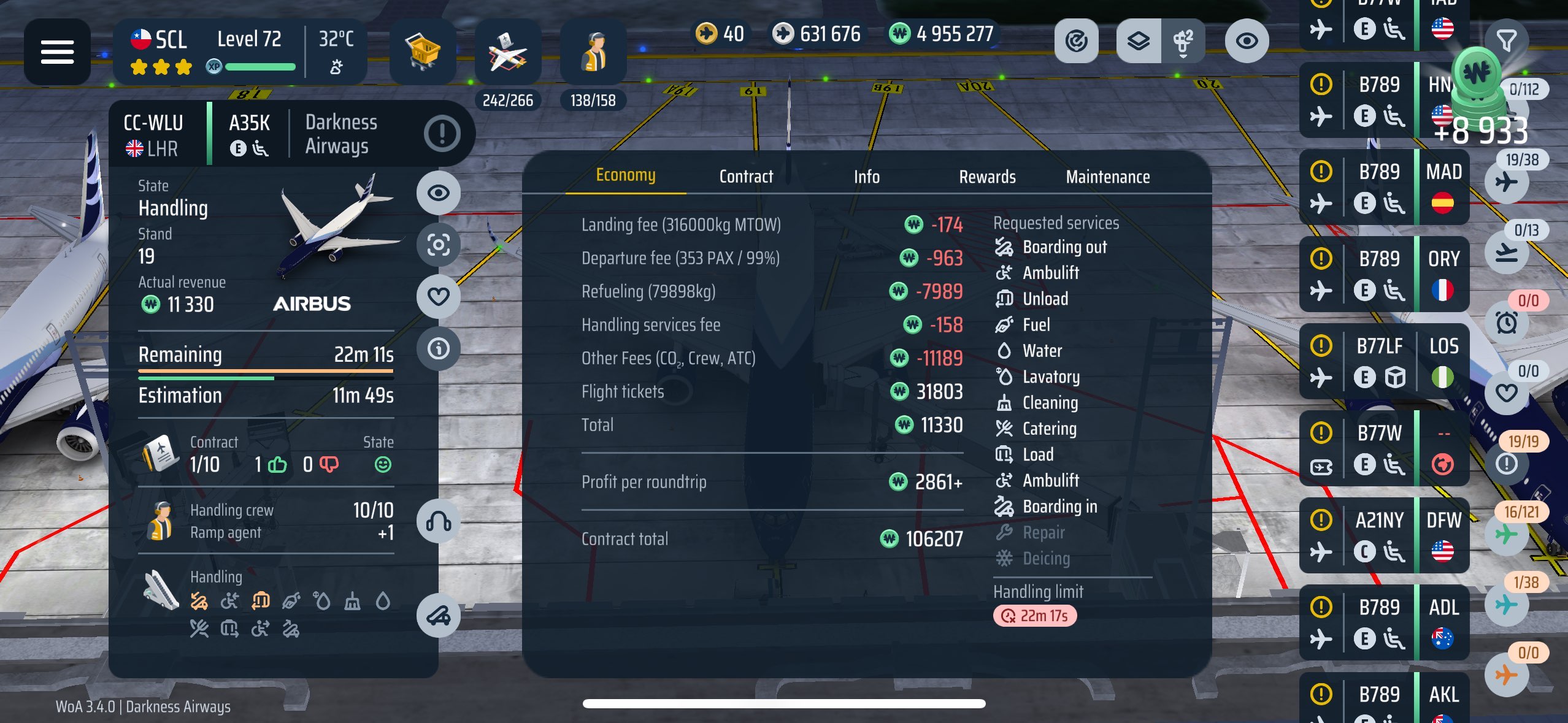
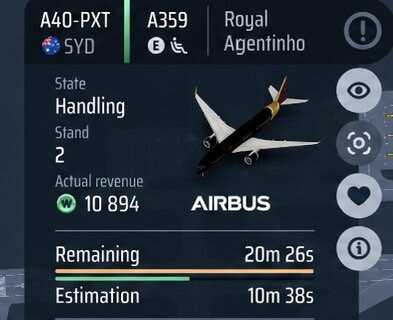
**THIRD ARGUMENT: A35K VS. B789 VS. A339
**
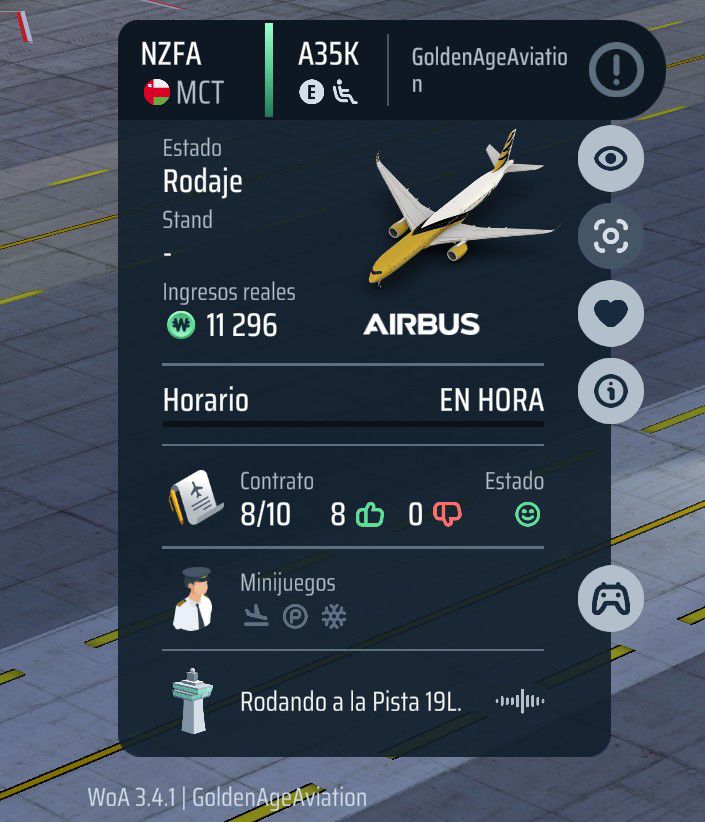
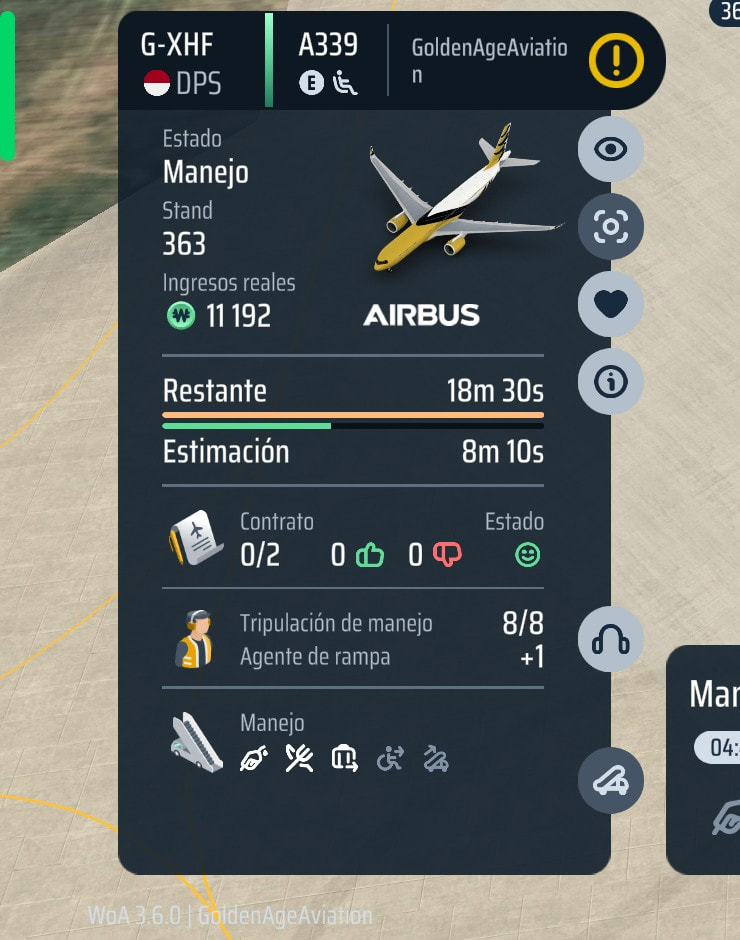
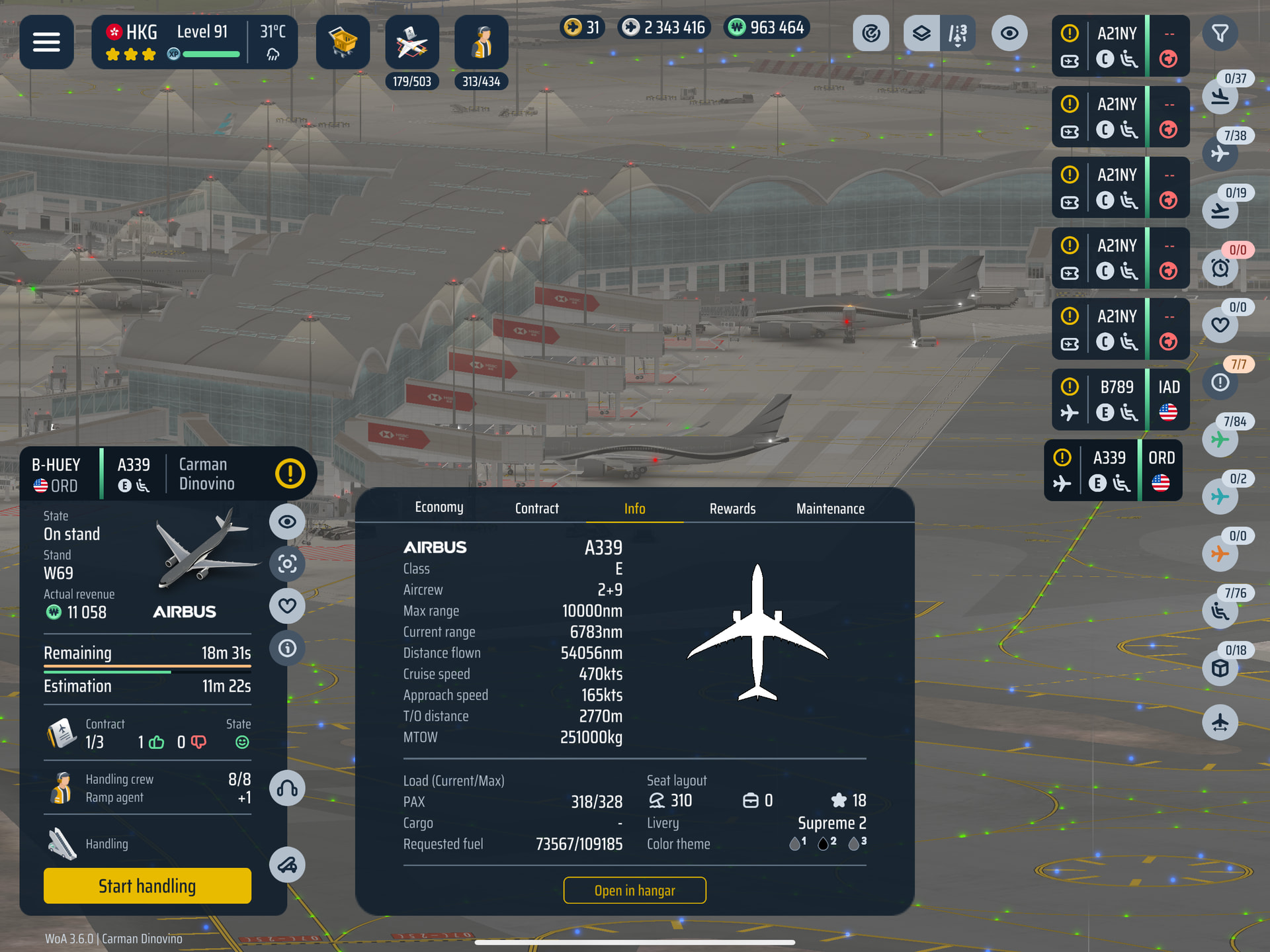
One of the clearest indicators that the A35K is currently underbalanced in World of Airports is the category of aircraft it ends up competing against. As stated earlier, the A35K was designed as Airbus’ direct response to the Boeing 777-300ER and later the Boeing 777-9. These aircraft occupy the same market segment: high-capacity, ultra-long-haul flagships built to transport well over 350 passengers while maximizing revenue on dense international routes. The A35K was never intended to compete with smaller aircraft such as the Boeing 789 or the Airbus A339, which belong to an entirely different capacity class. However, due to the current balancing in World of Airports, the A35K often finds itself producing earnings much closer to those aircraft than to the Boeing 77W. Looking at in-game performance, the B77W consistently generates significantly higher gross income thanks to its stronger seating retention and overall passenger capacity, leaving the A35K unable to keep pace despite being its real-world competitor. Instead, the A35K’s earnings frequently end up in the same range as the Boeing 789 and Airbus A339, aircraft that are both physically smaller, carry fewer passengers, and are intended to serve lower-capacity markets. That is a fundamental balancing issue. If the game’s economy places the A35K in the same profitability bracket as aircraft one size below it, then players are effectively paying flagship-level costs for mid-tier returns. As I mentioned earlier in my first argument, the A35K in-game just feels like an oversized A330. The progression between aircraft becomes distorted because upgrading from a 789 or A339 to an A35K yields little meaningful financial improvement, despite the substantial increase in purchase price, operating scale, and intended market role. A flagship aircraft should feel like a step above the aircraft beneath it, not simply a larger version that earns roughly the same amount. The Boeing 77W currently fulfills the role that the A350K should be sharing, while the A35K is left competing with aircraft it should comfortably outperform, only to be outperformed by those aircraft regularly. This is not an argument to weaken the 77W, as it performs appropriately for its class, but rather to bring the A35K up to the level where it can genuinely rival its real-world counterpart.
Golden’s A35K PB:
Golden’s A339 PB:
CEM’s A339 PB:
Golden’s B789 PB:
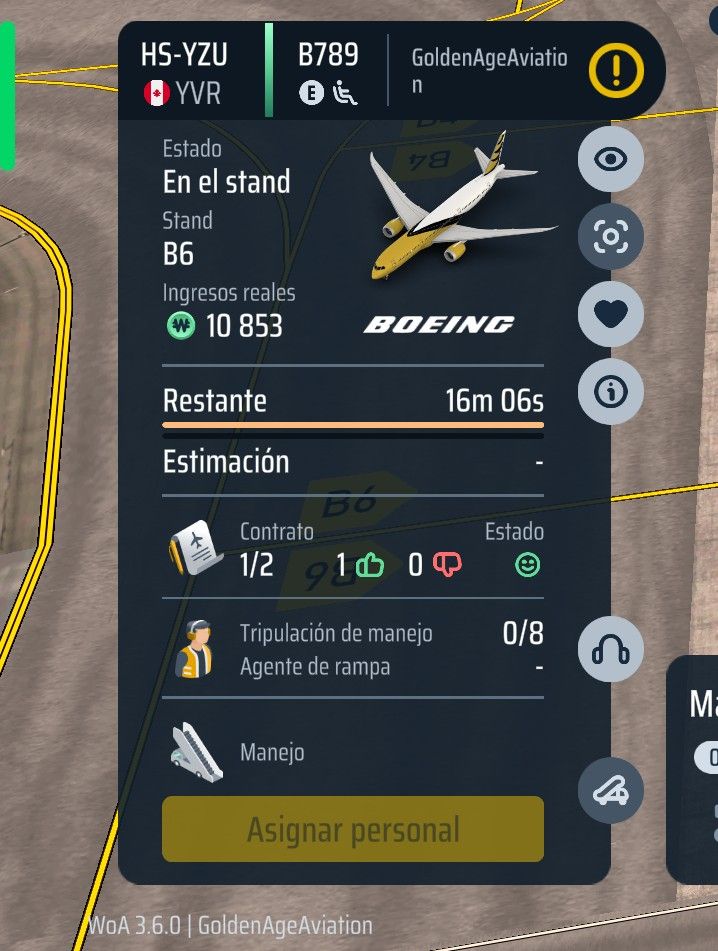
The difference between these is marginal.
Please finally refer to the screenshots provided to analyze the situation better for a higher judgement of what could be followed in future updates.
Thank you so much for reading my article. The community and I would love to see the A35K buffed in the future eventually. - Agent