Airport Name and ICAO/IATA Code
Stapleton International Airport
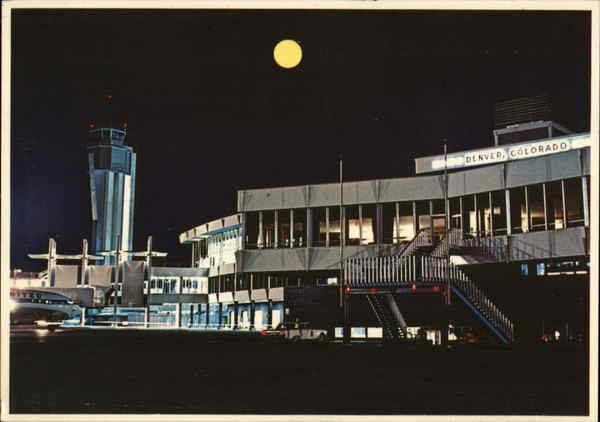
(Apologies for the low-ish quality, this was just a really nice postcard shot I liked.)IATA: DEN / ICAO: KDEN / FAA LID: DEN
Opened in 1929 (Oct. 17th), ceased operations in 1995 (Feb. 27th)
(Closed in favor of the new Denver airport, now known as Denver International)
Location (City, Country)
Stapleton (now called Central Park), located in Denver, Colorado, USA ()
Airport Type & Size
At the time, major international airport serving 33.1 million in 1994, a year before closing. Ranked within top 10 busiest airports in terms of passenger traffic in the United States prior to closure (sources vary, some claim 5th busiest and others claim 6th).At its peak, the airport had six runways - two sets of three parallel runways, and five terminal concourses. The airlines that each served will be explained in more detail below (in the Major Airlines & routes section).
The six aforementioned runway lengths were as follows:
17R/35L - 3,505m (11,500ft)
17L/35R - 3,658m (12,000ft)
8L/26R - 2,621m (8,599ft)
8R/26L - 3,049m (10,004ft)
7/25 - 1,485m (4,871ft)
18/36 - 2,362m (7,750ft)Across five concourses, the gate count was said to be 109. Diagrams will, of course, be provided below.
Why should this airport be added to World of Airports?
With the gradual additions of past airlines and aircraft (such as Braniff, TWA, Evergreen for airlines, and the 747 classics in 3.6.0/737 classics coming later), alongside a rise of demand for ‘historical’ content, I would say that Stapleton should be added given how it would complement other historic airports, such as Kai Tak and Athens (1938 - 2001).Furthermore, on the topic of past airlines and aircraft, retro airports like Stapleton could help work to incentivize their additions or expansion on them - take for example Continental, which only has one livery, being an event - at least as of this post (3.6.1). It would also provide further reasoning for other airlines such as Frontier Airlines (1950 - 1986) and Western Airlines, both of whom had hubs/bases at Stapleton.
In general, traffic and airlines at the airport would have the potential to be very mixed - yet of course unique, as smaller airlines such as Rocky Mountain Airways and Aspen Airways also had hubs at the airport; both airlines primarily operated types like DHC-6s (former) and DC-3s (latter).The airport itself also had a very distinctive layout. The six runways alone, varying in length and placement, make this airport very unique. This airport is not just another efficient hub, it’s imperfect, a bit flawed… but that’s what gives it character, at least to me. When you’re surrounded by a large residential area, you make do with what you have, you know?
Anyways though, in summary, Stapleton was an airport for many iconic airlines, both of the past world and the modern day, and I do believe that if added, it would be the perfect place to see all of them operate with each other once again. The airport itself is unique and would feel vastly different not just because it’s an older airport, but also because of its layout, and how operations might be managed. It isn’t a masterpiece or a perfect airport by any means - yet I don’t think it needs to be.
Major Airlines & Routes
As established before, many airlines used Stapleton as a hub, such as Braniff, Continental, Frontier Airlines (both 1950 - 1986 airline, and present airline), Hughes Airwest, PEOPLExpress (1980 - 1987 airline), TWA, United and Western Airlines.
Other airlines such as Markair, Aspen, Rocky Mountain Airways, USAir, Condor, and Martinair also were regular visitors at the airport.The following list is meant to document which airlines used what terminal concourse, across any point in time, as of the five operated before its closure:
Concourse A: Mesa Air Group, United
Concourse B: United
Concourse C: American, Continental, Mexicana, Western, Pioneer, Condor, Martinair
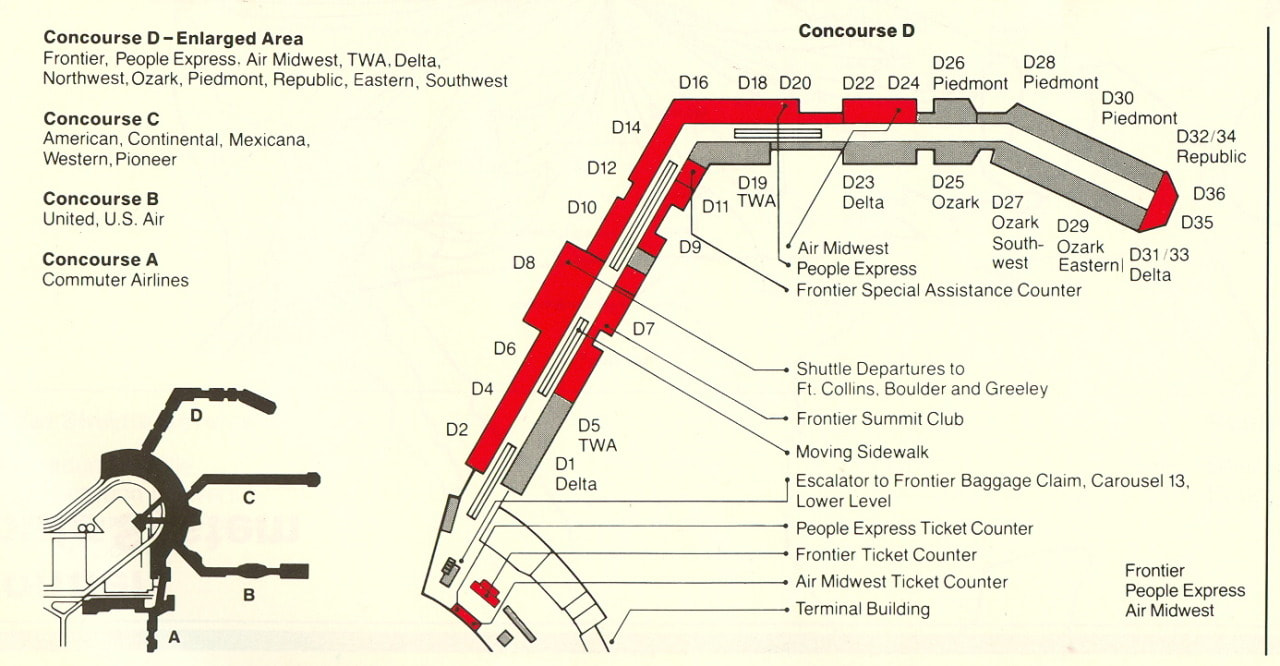
Concourse D: Continental/Continental Express, TWA, Frontier, PEOPLExpress, Northwest, Piedmont, Republic, Eastern, Southwest, Texas International
Concourse E: America West, American (moved?), Northwest (moved?), USAir/USAir Express, Sun Country, Pan Am, Delta(I’d appreciate it if you corrected me if any of this given information is wrong or inaccurate, I used multiple sources to determine this.)
Unique Features or Challenges
This airport has quite a few unique features and challenges.
The most obvious unique feature is, well, it’s an older, retro airport. Most modern airliners people would be used to now will either be very rare here or outright would not exist yet.
Instead of usually seeing A21NXs, B38Ms, B748s, and B77Ws, players will instead be greeted with B732s, B741s, B752s, DHC6s, etc.
This will likely require players to change up their usual strategy and adapt to the challenges of not only the older aircraft types, but the airport itself.Speaking of challenges regarding the airport: being as close and “boxed-in” as it was to residential areas, you’re sure to feel that.
The biggest way this is demonstrated by the runway designs.
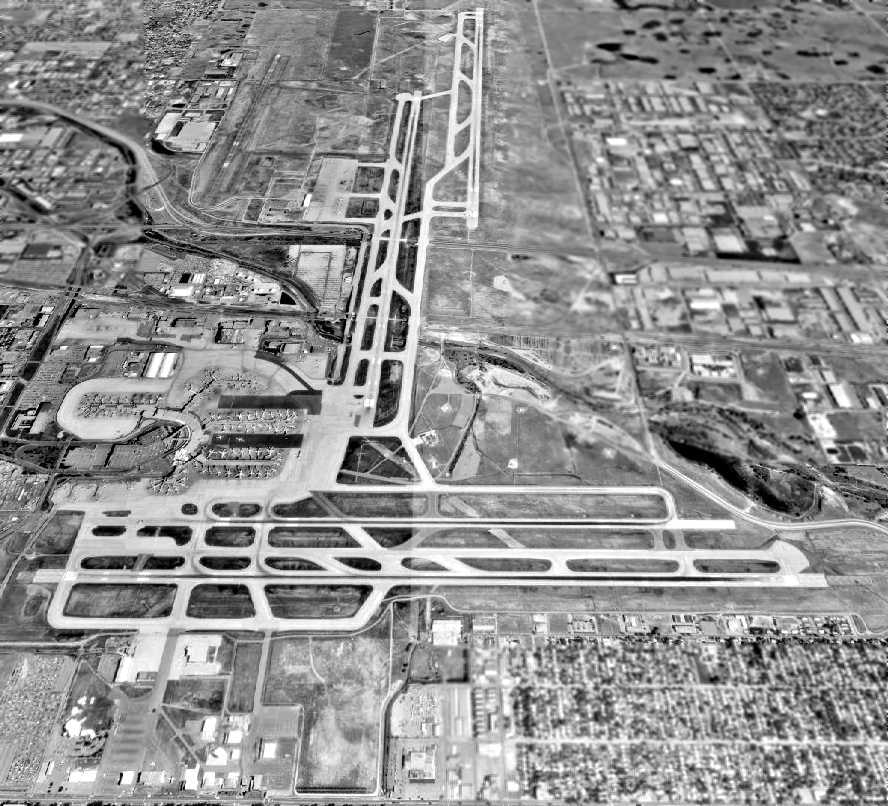
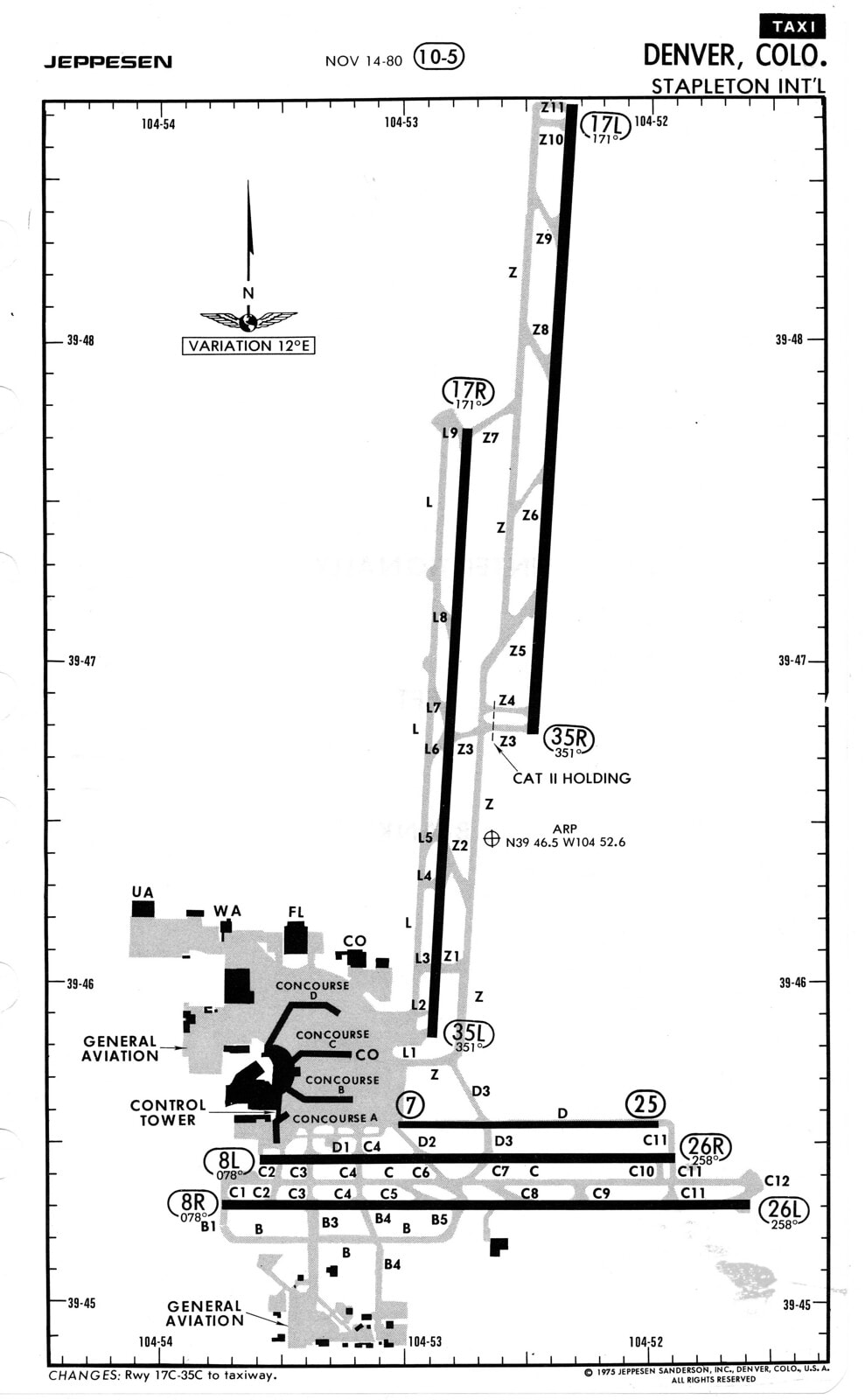
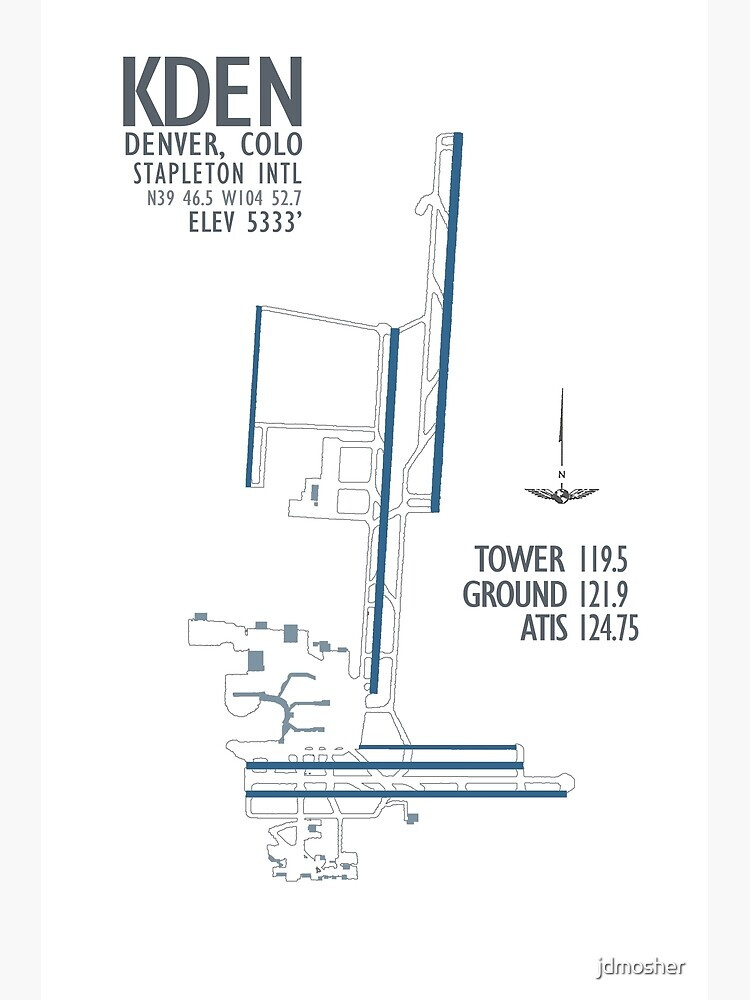
You might notice something looking at the diagrams of this airport - they put an emphasis on making the runways parallel, specifically through two groups of three runways; 7/25, 8L/26R, 8R/26L and 17L/35R, 17R/35L and 18/36.
Now, note down of all of those, with the exception of 18/36.
I say this because as you look closer, you might come to realize they’re not just parallel - they are also very close to one another. Close, parallel operations, be it landing or taking off, are extremely unlikely to happen. 7/25 is too short of a runway as-is for most jet airliners - patience will be needed as players manage traffic and runway use.
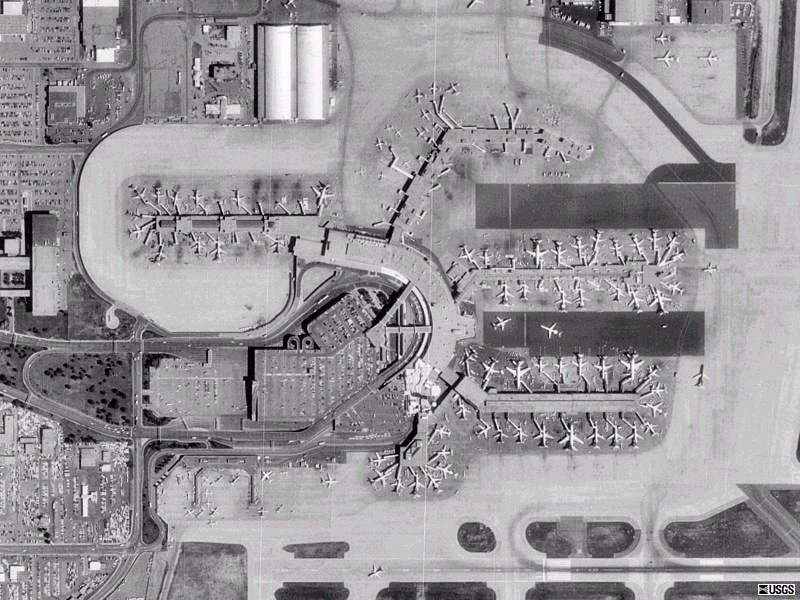
The only runway that is disconnected from most others and allows for its own, independent operations is 18/36 - which on its own appears to be relatively small, likely meaning larger airliners will be unable to use it. At best, the highest class capable of using it would likely be C-class aircraft, though that’s only my assumption - it’d be safer to say it’s a runway more tailored for A-B class.The taxiway routes may also prove challenging to deal with as well. Looking at satellite imagery, it appears there would only be one taxiway serving some concourses, especially D and E - potentially complicating operations if traffic is heavy around that region.
Furthermore, navigating the airport in general might be a challenge - sometimes aircraft will easily get to their gate, and sometimes aircraft will need to taxi across active runways, or require a long taxi time (for example if a 737 landed at Runway 18, then it would still likely take it some minutes to get to the terminal).
Optional: Links, images, maps, or videos
Sources:
Wikipedia page on Stapleton
PDF of Denver International compared to Stapleton International
Airport Obstruction Chart OC 114 - showing a diagram of Stapleton
A reddit thread - included as it has info about finding more Stapleton diagrams
Stapleton International in the 1990s - Part 1 / Part 2 / Part 3 / and on the day of closingMedia sources:
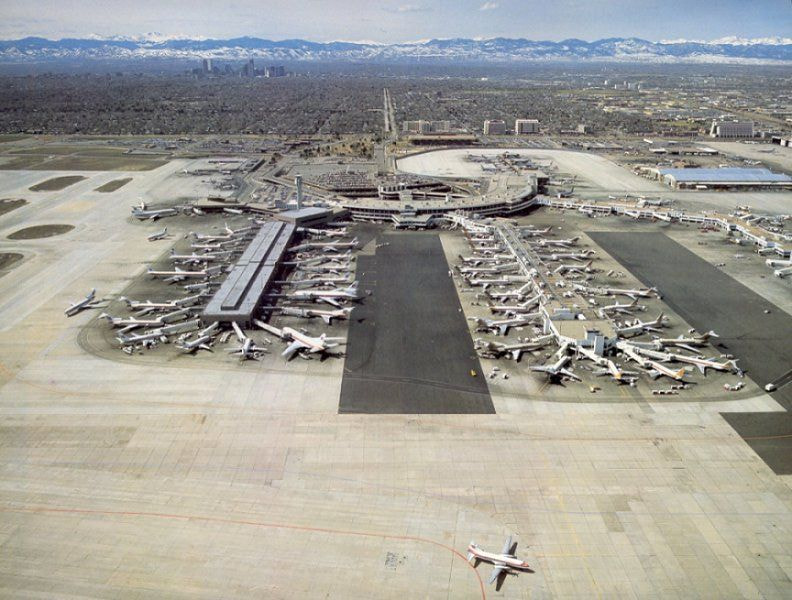
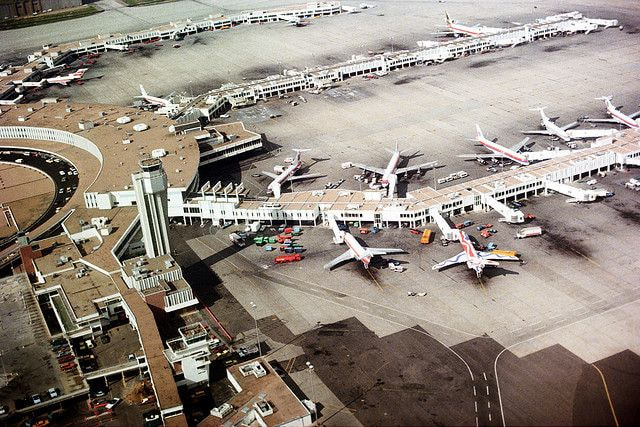
(Pictured below: Stapleton in the 1990s, shortly before closure)(Pictured below: An aerial view of all five concourses)
(Pictured below: Another view of most concourses, and the city/mountains in the region)
(Pictured below: An official FAA diagram of the 1980s showing Stapleton - keep in mind it does not include Concourse E and Runway 18/36, which were developed later in history)
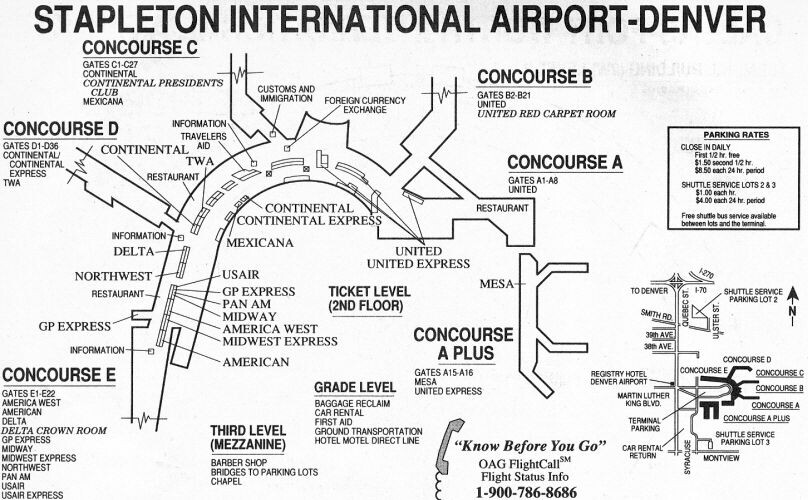
(Pictured below: An unofficial commercial diagram of Stapleton as it was later in the 1980s-1990s, with Concourse E and 18/36, though with comparatively less details)
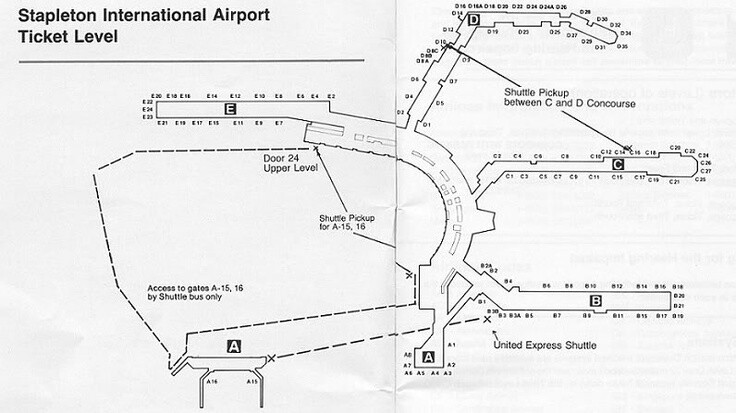
(Pictured below: A rough diagram showing the five concourses and their gate placements)
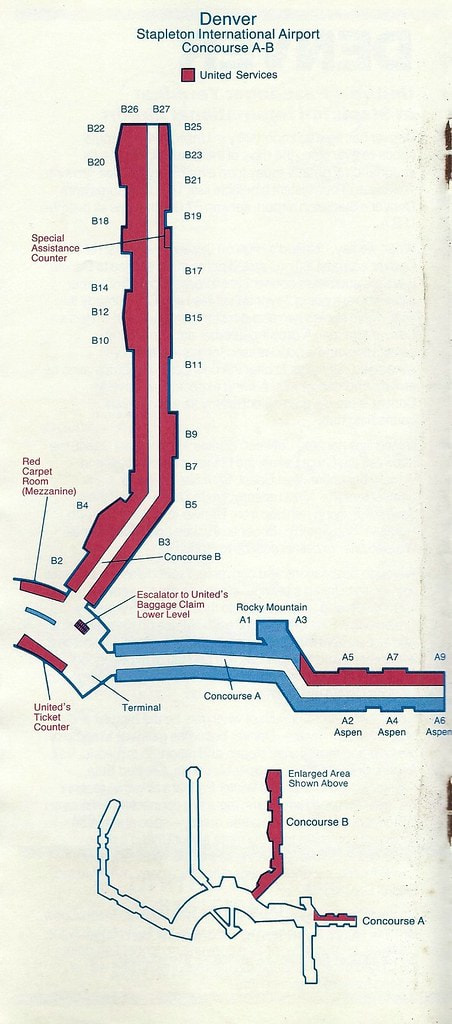
(Pictured below: A diagram of Concourse A-B)
(Pictured below: A diagram of Concourses A-D, with an emphasis on D, and their airlines, as Concourse E wasn’t open at this time)
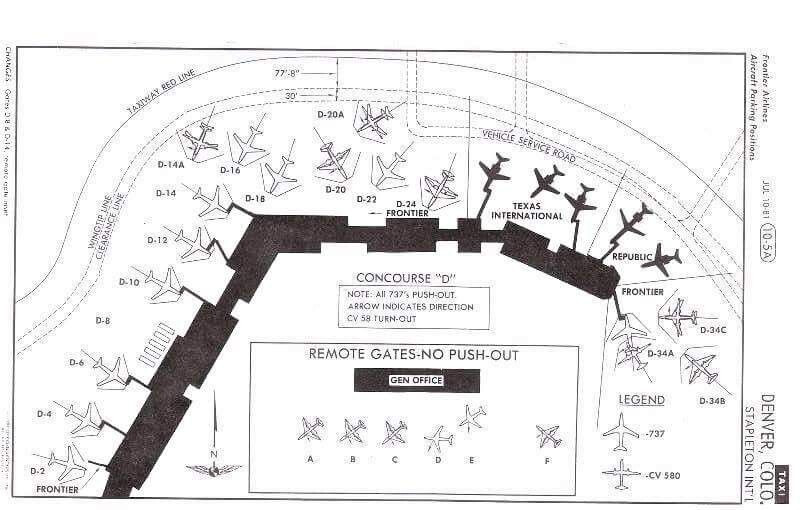
(Pictured below: A far more detailed diagram of Concourse D, though I unfortunately couldn’t find any others for the other terminals)
(Pictured below: Another overview of the concourses, but this time with some more information about airlines)
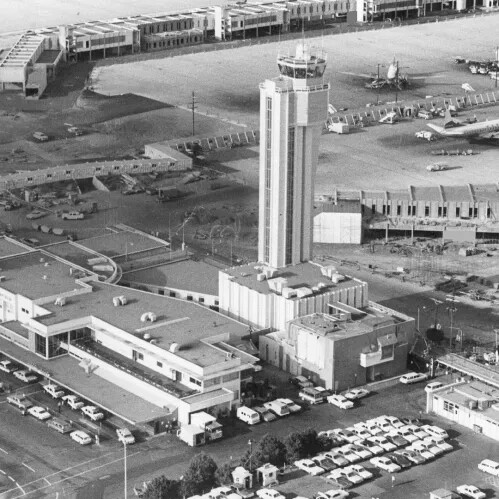
(Pictured below: The Stapleton International tower, as it was back then)
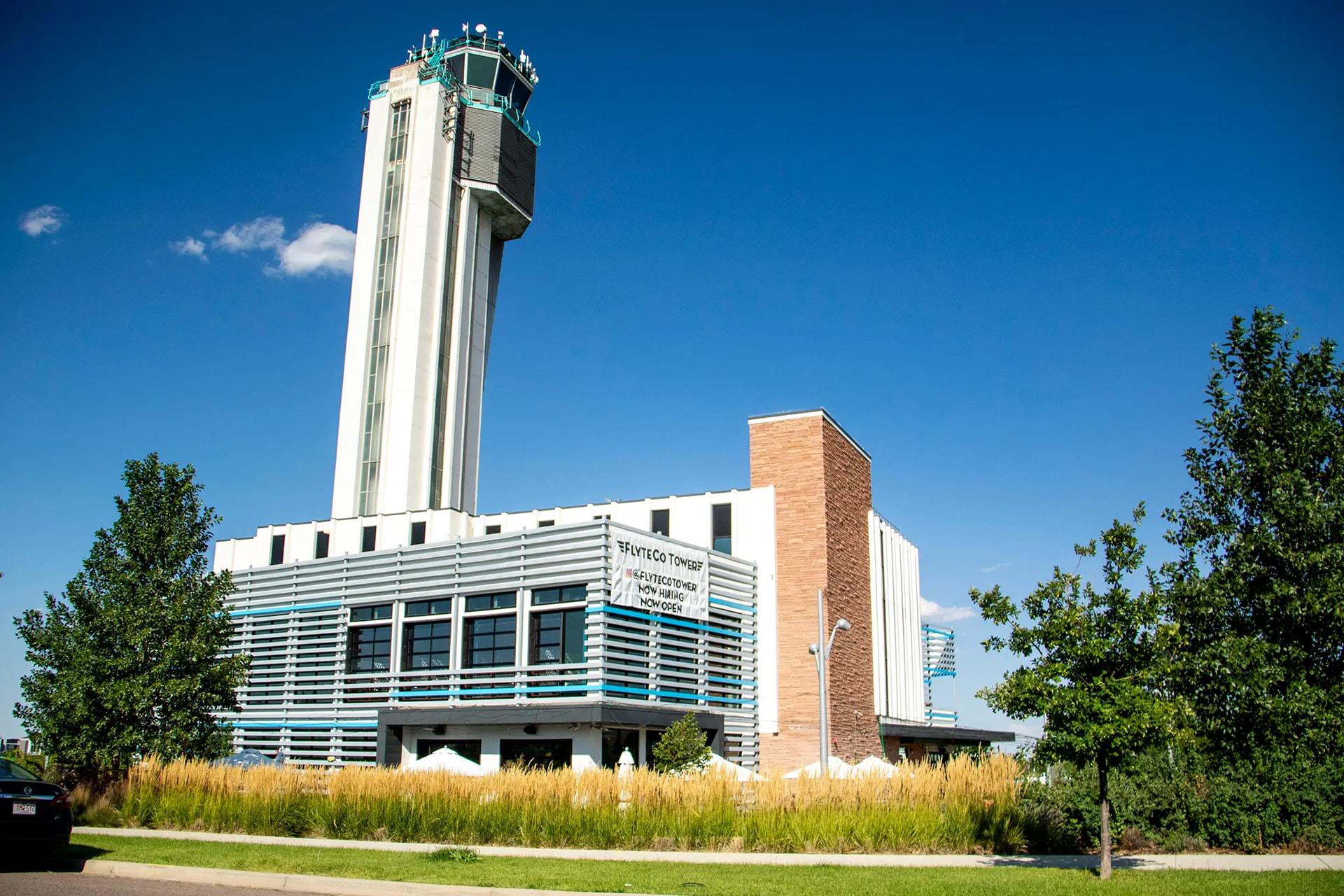
(Pictured below: The Stapleton tower, as it appears now)
(Pictured below: A little bonus shot I liked)
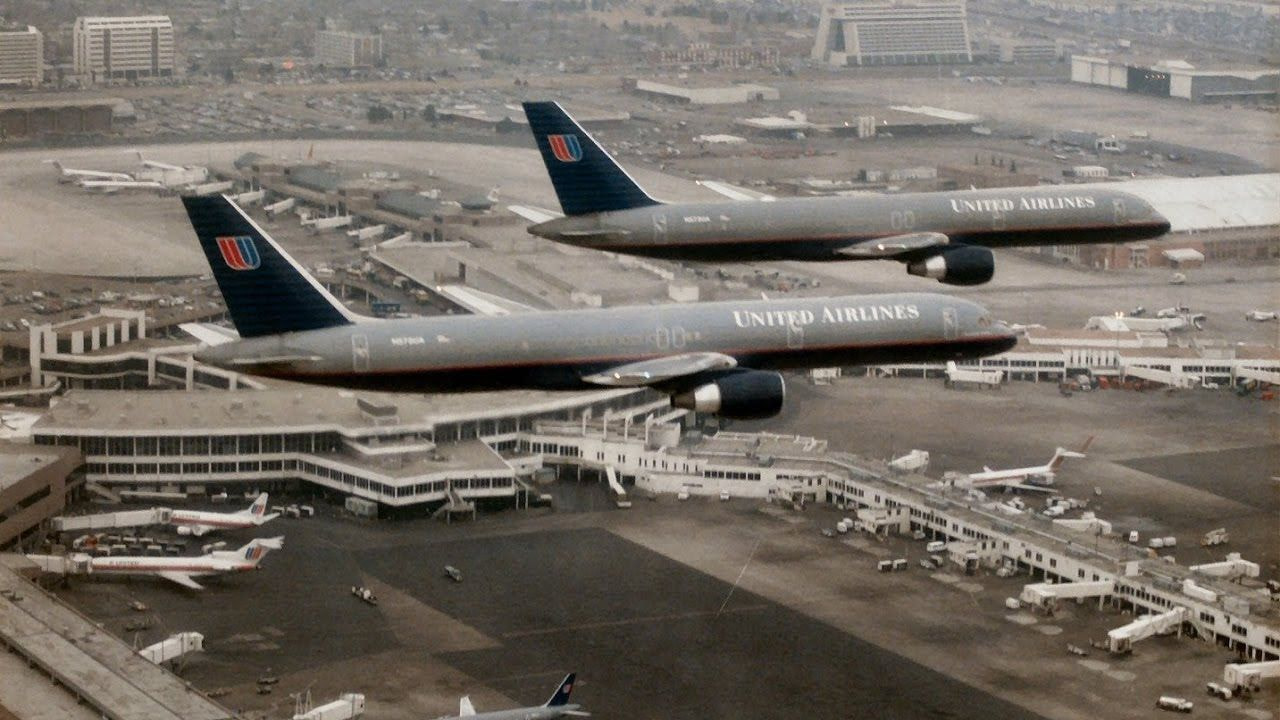
(Pictured below: United Airlines 757s doing a flyover on the date the airport was closed for the new Denver International)
thanks for reading, this was actually one of my suggestions made for the 4th of july
(the other suggestions are as follows: Overseas National Airways / ONA, National Airlines (1934-1980), Omni Air International B752)
 ,
,